
The Wise Report Provides Government Updates for Areas of Interest to HGS Professionals.
Check out the Latest Wise Reports below...
Release Date: 1 March 2013
Release Date: 1 March 2013
Release Date: 23 February 2013
Release Date: 17 February 2013
Release Date: 9 February 2013
Release Date: 3 February 2013
Release Date: 1 February 2013
Release Date: 1 February 2013
Release Date: 27 January 2013
Release Date: 16 January 2013
Release Date: 10 January 2013
Release Date: 5 January 2013
Release Date: 1 January 2013
Release Date: 1 January 2013
Release Date: 16 December 2012
Release Date: 1 December 2012
Release Date: 1 December 2012
Release Date: 17 November 2012
Release Date: 1 November 2012
Release Date: 1 November 2012
Release Date: 22 October 2012
Release Date: 15 October 2012
Release Date: 7 October 2012
Release Date: 7 October 2012
Release Date: 17 September 2012
Release Date: 10 September 2012
Release Date: 6 September 2012
Release Date: 6 September 2012
Release Date: 28 August 2012
Release Date: 4 August 2012

The Houston Geological Society is powered by a community that cares.
Your donation supports students, technical programs, outreach, and the partnerships that strengthen our geoscience community. If HGS has helped you learn or connect, please consider giving back

|
| Nature begins to renew itself, and so does our Houston Geological Society organization. All of our 49+ committees will have revealed at MidFest 22 Jan 2013 what they want to accomplish before the summer break, and what they envision for next year. Specifically they will be asked how many additional members they would like, what additional resources they can use, and what they expect to budget for next year’s activities. Most of our activities are planned to break even, some will make money for the HGS in general, or for special goals, and others will spend money to accomplish their worthy goals on behalf of the HGS. An example of a special fund raising event for scholarship funds is Legends Night. Put together this year by John Tubb, with help from the office and others, the event went quite well this January 14th. There will be a story on the event in this issue of the Bulletin. Two hundred and twenty guests filled a large dining room at the Westchase Hilton to honor special geologists, our Legends of Sedimentology, Dr. George Devries Klein, Dr. James Colman, Dr. Miles O. Hayes, and Dr. Robert L. Folk. Dr. Coleman was unable to attend, but each of the other three spoke eloquently of the paths they followed to their success in discovery and education about sedimentation. Sponsorship funds raised allowed John Adamick to present $2500 scholarships for from the HGS Foundation to outstanding undergraduate geoscience students from each of six different universities and $3000 to a seventh as the winner of the Maby prize. This event is related to all three of the HGS general goals, Technical Training, Networking, and Outreach to the community, which comprise our mission to serve our members and geoscientists at all career stages in the Houston area. Technical training was shared in the information that each speaker gave about his life’s progress in science investigation and teaching. Networking occurred as the registrants met around excellent hors d’oeuvres before a sit-down dinner. Outreach was accomplished by grants of scholarships to honor and help develop promising young geoscientists. More about training in general and our HGS training in particular will be described next month along with several of our outreach programs. Now I wish to concentrate on meeting and greeting. Note that I do not just use the term Networking. It is a valuable idea but it implies to me an emphasis upon extracting, from the parties involved, information about their skills, the organization in which they are involved, and their position in the organization. Afterwards, the exchange of business cards that may be filed for later possible use of the “contact” may occur. HGS meetings should lead to more just this. As computer and workstations separate people from one another, and as the internet and social media expand, communication becomes more condensed and more telegraphic. That which is lost is subtle and may include relevant details and real friendliness. Quality face-to-face communication is more important now than ever. People from different companies can share general information. Stories told and discussions about attitudes and cultures of companies allow us to learn what we do not personally experience. Hearing about the culture of different companies can encourage us to say internally, “Well, when I am manager I’ll never do that” or “What a clever idea!”. That is, we learn what works and what doesn’t; a skill we might like to add to our toolkit. When someone relates “I dodged a bullet today” it is time to listen. Their close call can be a lesson that can save you or your fellow worker pain or injury later. An instructive incident is that of a green teenager at his first job as a roustabout at a lab. His final job of the day was to close the rolling warehouse door at the back of the office. Finding it open when the front of the building was already locked, and not wanting to go all around to the front to unlock and go in to shutit from the inside, he decided to shut it from the outside. It hung up partway down so he put his fingers in the open crack in the horizontal panels to encourage it down. All too suddenly, the door descended and pinched all eight of his fingers in the crack. There he crouched, the door almost down, with two thumbs free trying to raise the door on the backs of the ends of his fingers. Can you imagine his pain? His efforts were unsuccessful. Fortunately, his calls for help did raise a late departing coworker to raise the door and free his fingers. The good news was that no bones were broken. The only evidence of the near disaster was a blood blister on the end of each finger. I never see a rolling door going down but that I do not pull my fingers to my palms. Yes, I was that young man. How often have you heard of near blowouts from people who were on wells? Our Pan American geologist years ago helped save a well because he knew what cuttings shaped like fingernail clippings indicated. It is extremely instructive to hear the signs of a blowout and learn what was done to control the well. It is truer than ever now that some geologists have never sat a well. So what is all this discussion about? It is a call to come to HGS luncheon or evening meetings at least once a month. At such meetings there is time to meet, greet, and discuss. It is more than Networking; it is learning from each other. You can make friends for life there. It is a call to participate! Come and bring a friend. Any meeting can be instructive, perhaps even provide the key to something you are puzzling about. Keep listening! |
We are providing a brief informational summary of 40 candidates for the HGS delegation to the AAPG House of Delegates. A formal ballot will be sent to those eligible to vote by AAPG. Each voting member will be asked to vote for 30 individuals.
The House of Delegates of the AAPG is made up of delegates from affiliated societies and international regions throughout the world. They are selected by popular vote from within their respective areas and serve a three year term.
Requirements of the delegates include:
| RIYAD A. ALI-ADEEB | |
 | ROBERT ARCHER With 25 years of E&P industry experience, Robert is the Vice President responsible for Business Development and Engineering at Zone Energy, LLC, a producing company with assets in the East Texas oil field. He holds a Bachelor of Science in Geological Geophysics from the University of Reading and a Master of Science in Petroleum Engineering from the University of Houston. He is a licensed Professional Geoscientist in the State of Texas. Prior to Zone Energy, Robert was an Executive Vice President with Knowledge Reservoir where his responsibilities included North American business development and the delivery of reservoir studies. His expertise is in the field of subsurface uncertainty quantification and integrated reservoir field studies with a focus on dynamic reservoir performance prediction. |
| ROBERT ARDELL | |
 | PAUL BABCOCK Paul E. Babcock has been a geologist since 1976 who has worked for The Superior Oil Company, Mobil Oil, Burlington Resources, Peoples Energy Production and currently — Sabine Oil & Gas LLC, formerly NFR Energy. Paul has served the local geological society in committee Chairman positions since 1997and has served as a Director and Vice President of the HGS. Paul is completing 15 years of service as an AAPG delegate. He was a member of the AAPG Advisory Council 2005-2008. |
 | MARTHA CREAGER BARNES I am a Certified Petroleum Geologist currently working as the Managing Partner of Santa Clara Minerals which provides management services for holders of oil, gas and other mineral rights in North American conventional and unconventional plays. I spent almost 29 years as a petroleum geologist for Marathon Oil Company in both exploration and production: offshore and onshore, domestic and international, carbonates and deep water clastics. In my spare time, I have volunteered for over 25 years with both Girl Scouts and Boy Scouts to promote science, technology, engineering and math (STEM) education and careers in grades K-12. I have also mentored Graduate Geoscience Students through internships at Marathon, Rice University and the University of Oklahoma. I was a corporate counselor for three years for the University of Texas GEOFORCE outreach program. Professional Affiliations: AAPG, HGS, National Association of Royalty Owners Certified Petroleum Geologist #5865, Texas Professional Geoscientist #4335 Rice University Board Member Affiliate Professional Science and Engineering Master’s Programs Education: B.A., Geology and Managerial Studies, Rice University, 1981 M.S., Geology, University of South Carolina, 1983 |
 | KATHLEEN BENNETT Kara Bennett earned her M.S. in geology at University of Florida, then worked briefly in the environmental industry before she came to Houston to work in oil and gas. She has been an exploration geoscientist for over 25 years, first with Gulf and Amoco; she became an exploration consultant in 1995. Kara is a long-time volunteer with HGS who has served as editor, VP, and President She has served three prior terms as a member of the House of Delegates. She enjoys her work with other volunteers for HGS, appreciates the honor and opportunity to represent the Houston region in the House of Delegates, and hopes to continue to serve in the future. |
| PAUL BRITT Candidate’s bio and picture not received before press time. | |
 | MARTIN CASSIDY In addition to those activities, Mr. Cassidy is at present the President of the Houston Geological Society 2012-13. He is an AAPG Certified Petroleum Geologist, has been a member of the AAPG for over 45 years, and received an AAPG Distinguished Service award in 2010. |
| CHERYL DESFORGES Candidate’s bio and picture not received before press time. | |
 | CRAIG DINGLER Craig is a hydrogeologist for Clean Harbors Environmental Services with previous experience in the petroleum industry and academia. He is a past-president of the HGS and has served as treasurer, Bulletineditor, and chairman of the environmental and engineering geologists group. He also was chairman of the HGS Constitution and Bylaws Committee 2008–2009. In AAPG, he has served the DEG as vice president and member of the advisory board. He was DEG technical chairman for the Houston 2006 AAPG annual convention and DEG vice chairman for the Houston 2011 meeting. He has B.S. and M.S. degrees in geology from SUNY-Oneonta and the Univ. of Idaho, respectively. |
 | JOHN DOMBROWSKI John is a petroleum geologist with over 30 years of industry experience. He began his career with Texaco in Los Angeles where he explored the onshore and offshore basins of the Pacific coast and Alaska. Increasing positions of responsibility led to assignments in Bakersfield, Denver and New Orleans. In New Orleans he managed a Lease Sale Team charged with evaluation and acquisition of properties for the exploration portfolio in the OCS waters of the Gulf of Mexico. In 1999 John left Texaco to redirect his focus towards international exploration projects, primarily in Africa. During the past seven years he has been involved in projects in Mauritania, Senegal, Guinea Bissau, Namibia as well as Panama in Central America. Currently he is a partner and Vice President of Project Management for the Peace River Group. His strengths and experience are in the fields of oil and gas exploration, project management and opportunity evaluation. He is an active member of several industry and professional organizations. |
 | STEVEN ANDREW EARLE Steve Earle received his B.S. degree in Geophysics from the University of Arizona in 1974. He started at Amoco Production Company in Denver and Amoco International. He then joined ARCO Oil & Gas where he spent 20 years with ARCO and Vastar in Anchorage, Tyler, Dallas and Houston. A short stint at BP after the merger was followed by one at Sabco Oil & Gas. He is currently a Senior Explorationist at Carrizo Oil & Gas where he works on development of unconventional resource plays. Mr. Earle was Chair of the North American Explorationists group before serving as Editor for the HGS Bulletinand as HGS President during 2011-12 term. He currently leads the HGS Grand Canyon Field Trips. He has been a Delegate to the House for 10 years. |
 | MIKE ERPENBECK Education: B.S. Geology, San Diego State University 1977 M.S. Geology, Texas Tech University 1979 M.B.A., Finance, University of Houston 1990 Experience: 1997- current Ziff Energy Group Senior Analyst, Project Manager, Manager U.S. Studies, Consultant Senior Associate 1990-1997 UMC Petroleum, Revenue/Gas Balancing Accountant, Special Projects Accounting Analyst 1987-1990 Various Firms Consulting Geologist / pursued Business Degree 1983-1987 Hemus Oil & Gas, Manager of Geology 1981-1983 Pilgrim Exploration, Geologist 1979-1981 Texas Oil & Gas (TXO), Geologist Summary of Relevant Experience for this Position: I have performed various geological and engineering functions throughout my 30 year oil and gas career. Most recently, I have conducted and led a wide range of technical and economic analyses in upstream oil and gas as a benchmarking expert for a well-regarded international management consulting firm. I am currently on the Board of Directors of HGS as Treasurer to the Society. I recently oversaw the administrative, personnel, and financial functions of the Society’s office as Chair of the Office Management Committee. In the past I have worked with the Academic Liaison committee of HGS and Arrangements Committee to GCAGS. I would welcome the opportunity to represent the interests of the Houston area geologists as Delegate to the AAPG. |
 | STEVEN GETZ Steven L. Getz is a professional geologist and geophysicist who worked more than nine years with Cities Service Oil Company and then became an oil and gas geoscience consultant for twenty-six years. He has generated prospects that led to large oil and gas discoveries in Equatorial Guinea, Guatemala, and in Trinidad, where he held the title of Chief Geophysicist for Trinmar Limited for two staggered six-month contracts. He has also generated prospects that became commercial oil and gas discoveries in Indonesia, China, the Permian Basin, and onshore Gulf of Mexico. From 2005 through 2010, he held the title of Chief Geologist with Allen Hoffman Exploration. Since 2011, he has consulted with Fortesa International on their onshore Senegal acreage, where he has served as their Chief Geophysicist and Exploration Manager of Senegal. Mr. Getz is currently the Chairman of the AAPG Geophysical Integration Group and the HGS North American Interests Group. He is also an active member of the SEG and is active in the IQEarth field studies group. |
 | TAREK GHAZI Tarek Y. Ghazi graduated from Stanford University with a B.S. and M.S. in geology, after which he enjoyed a long and diverse career with Conoco, that included stints in uranium exploration and production, oil and gas exploration research, and global new ventures in Casper, San Antonio, Ponca City, Dubai, and Houston. After Conoco, Tarek has held various positions in geoscience software and consulting services that have culminated in his current post as IT and Geoscience Technology Manager for Canadian International Oil (USA) Corp. Tarek has also been an active volunteer for the SPE, AAPG and the HGS in a wide variety of elected and appointed roles. |
 | GRETCHEN GILLIS Gretchen Gillis joined Aramco Services Company in Houston as Geological Specialist in 2010. In this role, she participates in the identification, analysis, and implementation of new technology for upstream exploration and production. She began her career as exploration geologist with Maxus Exploration Company and as development geologist with Oryx Energy Company in Dallas. Ms. Gillis joined Schlumberger in 1997 as founding coordinator of the Schlumberger Oilfield Glossary. During 13 years at Schlumberger she served as Oilfield Review Editor, Editorial Manager and Advisory Editor for oilfield marketing communications, and writer of “80 Years of Innovation,” a book about the history of Schlumberger. Ms. Gillis served as Elected Editor of the AAPG Bulletin from 2007 to 2010, for which she received the AAPG Distinguished Service Award in 2011. She co-chairs the AAPG Technical Advisory Committee, serves as member society representative to the American Geological Institute, and has served in the AAPG House of Delegates since 2010. Ms. Gillis earned a B.A. in geology from Bryn Mawr College, Pennsylvania, and a M.A. in geological sciences from the University of Texas at Austin. |
 | KAREN GLASER Karen Glaser is a Geological Advisor and a Geoscience Director of Curriculum at Schlumberger. She is a stratigrapher with experience in a variety of depositional environments which include black shales, carbonates, and deep water facies. Before Schlumberger she worked for Amoco Production Company, Exxon Production Research, and as an independent consultant. Dr. Glaser obtained a Ph.D. in geology from Rice University, a M.S. in petroleum geochemistry from the University of Oklahoma, and a B.A. in geology from Colgate University in New York. Karen has been a member of AAPG since 1981 as member of a variety of committees, committee manager for Sections and Geosciences, and is currently serving as the Secretary/Editor of the House of Delegates. She has been a registered Professional Geologist in the State of Texas since 2003. |
 | LISA GOETZ I have always wanted to be a geologist. I earned a B.A. in Geology from Lafayette College (‘75) and a M.A. in Geology from The University of Texas at Austin (‘77). Since then, I have worked 30 years with Conoco/ConocoPhillips and over 5 years with Marathon Oil Company. My experience includes 5 years in uranium / metals exploration / development and my 30+ years petroleum experience is divided equally between North America and International. Trained as a regional geologist, my petroleum expertise includes CBM, CO2, and conventional and unconventional oil and gas exploration / development / production. I currently hold the position of Chief Geologist, North America Onshore Exploration at Marathon. Through marriage, I also have owned / operated for over 25 years a very small oil and gas production company in southern Oklahoma and have a firsthand understanding of the difficulties and joys faced by small operators. I have been a member of the AAPG for more than 30 years and a member of the EMD since its inception. I have presented papers and helped to coordinate AAPG sectional meetings. I have also served as Secretary for the Albuquerque Geological Society, and Program Committee Chairman for the West Texas Geological Society. For many years I have been deeply involved in mentoring both within the petroleum industry and in high school, undergraduate, and graduate settings. This year it is my pleasure to be able to continue as an industry mentor for a third year in the AAPG Gulf Coast Imperial Barrel Competition. I look forward to the opportunity to work more closely with AAPG delegates and with HGS members to make our science more attractive to high school and undergraduate / graduate students and to help make our industry more responsive to the public and industry needs. |
 | PAUL HOFFMAN Paul Hoffman received a B.S. in Geology from the University of Texas at Austin in 1975. He began his career with Cities Service in Houston, where he worked in development and exploration assignments, principally in the federal waters of Texas and Louisiana, and in onshore Alaska. He joined Intercomp in 1979, where he conducted detailed reservoir mapping for 3D reservoir simulation in several fields in the Middle East, onshore and offshore California, Texas, and Louisiana. From 1981 to 1990, Paul was employed in the Gulf Coast Region of Ladd Petroleum where he progressed through positions as Exploration Geologist, Manager of Geology, General Manager of Exploration, and Vice President, E&P. There he contributed to the growth of the Gulf Coast Region from its infancy to Ladd’s highest valued region in 1990. In 1991, he established a Gulf Coast Region office for Duncan Energy and eventually attained the position of Executive Vice President and Chief Operating Officer of Duncan Oil. In 2003, he joined Cox & Perkins Exploration and became its Chief Operating Officer. Paul accepted the position of President of the Allen-Hoffman Exploration Company in 2008, where he directs exploration activities in the Gulf Coast and beyond. Paul is a member of the Houston Geological Society and the American Association of Petroleum Geologists. He is an AAPG Certified Petroleum Geologist and a Licensed Professional Geologist in the State of Texas. Mr. Hoffman has served his seventh term in the AAPG House of Delegates and was elected Foreman of the Houston delegation for 2005 – 2006. He chaired the Alumni Activities Committee for the 1988 AAPG Annual Meeting. In addition, he served as Vice Chairman of the AAPG Prospect and Property Expo (APPEX) in 2001 and 2002, and as General Co-Chair of APPEX in 2003. He has served four years on the AAPG Constitution and Bylaws Committee, which he chaired in 2007–2008; and in 2011–12, he served on the HOD Nominations and Elections Committee. Beginning in 1989, Paul served in four different elected offices for the Houston Geological Society, ultimately as President 2001–02. He currently chairs the HGS Ballot Committee and serves on the Board of the Houston Geology Society Foundation. |
| WILLIAM HOWELL Candidate’s bio and picture not received before press time. | |
 | BARRY KATZ Barry Katz received his B.S. in geology from Brooklyn College in 1974 and his Ph.D. from the University of Miami in 1979 in marine geology and geophysics. After he received his doctorate he joined Texaco’s Bellaire Research Center where he held numerous technical and supervisory positions. He continued with Chevron after the merger in 2001, where he has been part of Chevron’s Energy Technology Company. He currently serves as a team leader for hydrocarbon charge. His work has focused on the applications of geochemistry. He has been engaged in research and technical support activities and has worked in approximately 50 onshore and offshore basins on six continents. Barry has authored more than 75 papers and has edited five books. He serves as editor and reviewer for 10 journals, including editor-in-chief of The Open Geology Journal, and as a senior associate editor of the AAPG Bulletin. Barry has been chairman of IODP’s Environmental Protection and Safety Panel for the past decade. His honors include being named a Chevron Fellow and being named an Honorary AAPG Member. He served as Elected Editor for HGS and currently serves as President-Elect. |
 | ROSEMARY LAIDACKER Ms. Laidacker is an independent geophysical contractor currently working for Chevron. She has specialized in oil and gas prospect generation and development in the Gulf Coast area, onshore and offshore, and has worked on many discoveries in Texas and Louisiana. She started her career with Cities Service Oil and spent time at Total Petroleum where she was District Geophysicist. Before work as a contractor at Chevron she was an employee at Greystone Oil and Gas. She obtained a B.S. degree in Mathematics and Physics at Lamar University and a Master of Science degree in Geology / Geophysics from the University of Houston. Rosemary is a long time member of the AAPG and has been an active volunteer for the HGS. As Chairman of the Continuing Education Committee she has won the HGS President’s Award in 2012 and the Rising Star Award in 2011. Ms. Laidacker will be serving on the Field Trip Committee for the 2014 AAPG Convention to be held in Houston. She is also a member of the SEG and local GSH, and a Texas Licensed Petroluem Geophysicist. As a member of the AAPG House of Delegates, I will actively work to increase the local HGS membership and the AAPG membership. I enjoy being involved with the HGS and AAPG organizations and would like to expand my involvement so I can contribute more to both. I want to represent the HGS local needs as member of the AAPG House of Delegates. I ask for your support. |
 | CLAUDIA LUDWIG Education: B. S. in Geology from Lamar University M. S. in Geological Oceanography from Texas A&M University Companies: Michigan Wisconsin Pipeline, Worldwide Energy, Phillips, Currently Independent / Consultant Awards: HGS President’s Award, HGS Distinguished Service Award, HGS Honorary Lifetime Membership Award, HGS Gerald Cooley Award Memberships: AAPG, MTS, SME, HGS, HGS’s representative to ECH, former ECH Vice President Other Activities: HMNS Volunteer Houston, Galveston Orchid Society, HAL-PC |
 | EVELYN MEDVIN Education: B.S. University of Oklahoma 1980 Companies I’ve worked for in my 29 year career: Cities Service, Occidental Petroleum, Schlumberger, Coherence Technology Company, Core Laboratories Locations: Tulsa, Ok., Houston, Tx., Bakersfield, Ca., A lot of international travel along the way! Geo-Specialties: Geophysics, Geology & Engineering applications Basins worked: Too many in South America to mention, On-shore Gulf Coast, Gulf of Mexico, Now, in any basins where our customers works My career: Exploration Geophyscisist 1980–1995, Geophysical Marketing Specialist, Vice President of Business Development Society affiliations: AAPG, SPE, IPAA, HGS: AAPG member since 1980, Various convention committees over the past 10 years |
 | RON MEERS Ron Meers is the Southeast Asia Exploration Manager for BHP Billiton Petroleum. During his 28-year career at BHPB, Ron has held exploration and appraisal positions in numerous areas including the Gulf of Mexico, Atlantic Margin, Southeast Asia, and the Permian Basin. Prior to BHPB, he worked for Gulf Oil Corp. and Northern Natural Gas Co., both in Midland, Texas. Ron has a B.S. degree in geology from West Texas A&M University and an M.S. degree in geology from Texas Tech University. He is a Licensed Professional Geoscientist (#17) in the State of Texas and also an AAPG Certified Petroleum Geologist (#3308). Over the past several years, Ron has served as a member of the Houston House of Delegates in both active and alternate roles. He would like to continue his association with the House of Delegates in support of the local membership of the AAPG and HGS. |
 | KENNETH MOHN Kenneth W. Mohn was born in Port Arthur, Texas and moved around the globe as a Chemical Engineer’s son in the oil industry. He holds an M.Sc. in Geology. Currently he is Exploration Vice President for Fugro Multi-Client Services, Inc. in Houston Texas. He has served in the HOD in the past. He worked for a year for a couple of small independent oil companies in his early career. He spent the past 25 years working for private and public service companies on various aspects of Multi-Client Seismic surveys and Business Development. Statement: I am interested in the current status of our industry and want to ensure that we support the needs and growth of our members in the Society. I am currently a member of the Houston Geological Society, Houston Geophysical Society and the Society of Exploration Geophysicists. |
 | DWIGHT McCLINTOCK (CLINT) MOORE Clint Moore has been an HOD Delegate since 1989, has written many Bylaw amendments for the HOD which improved the workings of the Association, and advanced fairness through reform of our governing documents. He received the HOD’s “Distinguished Member of the House” Award in 2001, a special HOD Chairman’s service appreciation award in 2011, the HOD’s “Long Service Award” in 2012, and has served on the Constitution & Bylaws Committee many times (past Chairman), as well as on other HOD committees. He is past Treasurer of AAPG (2004-06), past President of HGS (1994-95), and elected to the AAPG Advisory Council (1999-2002). He’s been awarded four AAPG Certificates of Merit, the AAPG Distinguished Service Award (2010), the AAPG Search & Discovery Award (2011), and the DPA Distinguished Service Award (2001). He currently serves as Chairman of the AAPG Investment Committee, Vice-chairman of the AAPG Career Service Committee, and Co-chairman of the AAPG Foundation’s new Military Veterans Scholarship Program. He would be honored to continue to serve his fellow members in this important role as an HOD Delegate. |
 | RICHARD NAGY I am a geologist with 33 years of industry experience, and have been a AAPG member since 1978. I have a Bachelor of Science in Geology (1976) from San Diego State University and started my career with Phillips Petroleum in 1980. I have worked mostly in exploration in the Gulf Coast but also have experience in Alaska and California, and offshore West Africa. I am currently employed by Noble Energy in their Deepwater Gulf of Mexico Business Unit as a Geological Advisor. I have held the position of delegate in the Houston Delegation for many years and have been a past Chairman so I am very familiar with the duties and responsibilities. I have been a DPA member since 1995 (CPG #5364). In addition to my involvement with the House of Delegates, I have served two terms (2005–2011) on the DPA Advisory Council and represented the Gulf Coast Section. From 2011 to 2012, I served as the DPA Council Vice President. I currently serve on the Resolutions Committee of the House of Delegates of the AAPG. |
 | WILLIAM DON NEVILLE Education: B.A. Geology St. Joseph’s College, 1957 M.S. Geology University of Wisconsin-Madison, 1959 Experience: 1997-Present President, Ginger Oil Company, Woodlands, TX, Gulf Coast E&P 1995–97 Partner, A&D, Inc., Houston, TX Acquisitions 1987–95 Exploration Manager, Gulfstar Energy, Houston, TX, Offshore E&P 1985–87 Consultant, Various, Houston, TX, Gulf Coast Area 1979–85 Geologist, Lear Petroleum, Houston, TX Gulf Coast Area 1979 Geologist, Mitchell Energy, Houston, TX, Gulf Coast Area 1974–79 International Geologist, Union Texas Petroleum, Singapore, Far East Area 1972-74 Geophysicist, Caltex Petroleum, Sumatra,Indonesia 1960-72 Geologist/Geophysicist, Chevron, Wyoming and Rockies; Gulf Coast E&P, New Orleans, LA |
 | ROBERT PLEDGER Mr. Pledger is currently an oil and gas consultant engaged in prospect generation and evaluation and is President of Ashford Oil and Gas Company, LLC. Prior to 2008, he was President of Benchmark Oil and Gas AB, a Swedish public company and served on their Board of Directors. His wide range of areas of experience include the Gulf Coast, Alaska, West Texas, Kansas, Oklahoma, New Mexico, California, and many countries internationally. Prior employment includes Sun Oil Company, May Petroleum Company, General American Oil Company of Texas, and Shenandoah Oil Corporation. He has served twice as Chairman of the Houston Chapter of Society of Independent Professional Earth Scientists (SIPES) and on the National Board of Directors, District 4 Representative for the American Institute of Professional Geologists (AIPG), and as a Director of the Houston Geological Society, as Vice-President, and as Chairman of the Continuing Education Committee. He is active in the American Association of Petroleum Geologists and is a former member of the House of Delegates and was Chairman of the Short Course Committee for the AAPG 2002 Convention. He is a certified geologist by the AAPG, the AIPG and the SIPES and is a Licensed Professional Geoscientist with the State of Texas. He is a member of the Board of Trustees and Chairman of the Advisory Committee for the Department of Space and Earth Sciences at Lamar University. I have been an active member of both the HGS and AAPG throughout my career and am especially interested to continue to serve as a volunteer representing the membership of the AAPG as a delegate for the next three years. |
 | RUSTY RIESE Dr. W.C. Rusty Riese is a geoscientist based in Houston, Texas. He is widely experienced, having worked in both minerals and petroleum as a geologist, geochemist, and manager during more than 39 years in industry. He participated in the National Petroleum Council evaluation of natural gas supply and demand for North America which was conducted at the request of the Secretary of Energy; in the more recent analysis of global supply and demand requested by the same agency; and in the National Research Council analysis of coalbed produced waters and their management in the western United States. He is currently a member of the AAPG Committee on Resource Evaluations, and a member of the House of Delegates. Dr. Riese has written and lectured extensively on various topics in economic geology including biogeochemistry, isotope geochemistry, uranium ore deposits, sequence stratigraphy, and coalbed methane petroleum systems; and he holds numerous domestic and international patents. He has more than thirty years of teaching experience including twenty-five years at Rice University where he developed the curricula in petroleum geology and industry risk and economic evaluation, as well as several other courses. He is currently an Adjunct Professor at Rice University, the Colorado State University, and the University of New Mexico, where he sits on the Caswell Silver Endowment advisory board. He is a fellow in the GSA and the Society of Economic Geologists and a member of the AAPG and several other professional organizations. He earned his Ph.D. from the University of New Mexico in 1980; his M.S. in geology from the same university in 1977; and his B.S. in geology from the New Mexico Institute of Mining and Technology in 1973. He is a Certified Professional Geologist, a Certified Petroleum Geologist, and is a Licensed and Registered Geologist in the states of Texas and South Carolina, respectively. |
 | TOM RILEY Education: M.S. in Geology, Stanford University B.A. in Geology, Carleton College Experience: IHS Global, Inc., Kelman Technology, Inc., Sun Microsystems, Western Atlas Software Landmark Graphics, Inc., Shell Western Exploration & Production, Inc. Professional Affliations: AAPG, Houston Geologic Society, Geophysical Society of Houston, Past Board Member Awards: Sales Manager of the Year, IHS Global, Inc. Sales Rookie of the Year, Sun Microsystems Statement: My desire is to better serve our local society. Born in Hawaii, raised in Minnesota, educated in California, I moved to Texas in 1988 with a Master of Science in Geology to explore for oil and gas with Shell Oil. In 1993, I joined Landmark Graphics as a software trainer and soon transitioned into technical sales. The past 18 years have been focused selling software, hardware and services for Landmark Graphics, Western Atlas Software, Sun Microsystems, Kelman Technologies and I currently serve as Senior Director Sales for Petra and Kingdom suites for IHS. Sales and serving others are my passions! I am an active member of the Houston Golf Association (HGA) having served the past three years as Chairman Hospitality of the Champions Pavilion 18 for the Shell Houston Open Golf Tournament. |
 | PATRICIA SANTOGROSSI Patricia Santogrossi is geoscientist who has enjoyed nearly 37 years in the oil business. She is currently a Leading Reservoir Geoscientist and Non-operated Projects Manager with Statoil, an international arm of the state oil company of Norway. She has been engaged for the last eight years in its Gulf of Mexico business development, corporate integration, prospect maturation, and multiple appraisal projects. Patricia has previously worked with domestic and international Shell Companies, Marathon Oil Company, Vastar Resources till the parent Arco’s acquisition by BP — in research, exploration, leasehold and field appraisal as well as staff development. Subsequently, Patricia became Chief Geologist for Chroma Energy, who possessed proprietary 3D voxel vizualization technology, and for Knowledge Reservoir, a reservoir characterization and simulation firm that specialized in Deepwater project evaluations. Patricia has been a member of SEPM for 38 years, of AAPG for nearly 30 years, and has recently begun her second term as a Trustee for GCSSEPM’s Foundation. She received a GCSSEPM Distinguished Service Award in 2011. She served HGS last year as Bulletinco-editor and now serves as HGS BulletinEditor 2012-2013. Patricia is a Licensed Professional Geoscientist (#856) in the State of Texas. Patricia was born, raised and educated in Illinois, and first headed to Texas after she received her M.S. in Geology from the University of Illinois, Champaign-Urbana. Her other ‘foreign assignments’ have included New Orleans and London. |
 | SHARIE SARTAIN Sharie Sartain is a Consultant with 31 years of industry experience. She started her career with Phillips Petroleum, where she worked on exploration and production projects in the Gulf of Mexico and Lower 48 States. Since 2002 she has worked as a consultant in the Deepwater Gulf of Mexico, and on international projects. She has a B.S degree in Geology from the University of Akron and a M.S degree in Geology from Kent State University. Sharie has previously served on the HGS Executive Board as Director 1999-2001 and Secretary 2001-2002 and is currently the HGS Membership Chairman. In 2010 she received the HGS President’s Award. She has also served several terms in the AAPG House of Delegates, including one year as the Houston Delegation Foreman. Sharie is a Licensed Professional Geoscientist in the State of Texas and an AAPG Certified Petroleum Geologist. |
| MARTIN SHIELDS Candidate’s bio and picture not received before press time. | |
 | CARL STEFFENSEN Geologist Carl Steffensen (B.S. Geology ‘80, Illinois; M.S. Geology ‘82, Texas A&M) has over 30 years industry experience with ARCO, Vastar, and currently BP America, Inc. During this time he has worked a variety of Tertiary, Mesozoic, Paleozoic, and Pre-Cambrian exploration and production projects in the Gulf of Mexico (shelf and deepwater), onshore Gulf Coast, Midcontinent, Midwest, southeastern United States, and Latin America, with a focus on carbonate sedimentology /stratigraphy and petroleum systems. Carl has served in many positions with both the HGS and AAPG, and is currently a member of the AAPG Distinguished Lecturer Committee and an AAPG Associate Editor. |
 | CHARLES STERNBACH Charles Sternbach is a Ph.D. geologist, former staff geologist at Shell, and currently president Star Creek Energy Company, Inc. Charles has been a member of AAPG since 1980, held chair or leadership roles on ten AAPG or HGS committees, and is an Honorary Member HGS. Among his AAPG activities are founding chair of AAPG 100th Anniversary Committee and four terms in the HOD. He was General Chairman for the 2006 Annual Convention, Houston, General Vice Chairman for the 2002 Annual Convention, Houston, and officer candidate for AAPG Vice President Sections 2009–2010. AAPG Awards include three Certificates of Merit, a Distinguished Service Award in 2005, and Honorary Membership in 2011. Charles served as President of HGS and President of DPA. He looks forward to service as the President of GCAGS in 2015. Other key accomplishments include founding the HGS Legends Program, the Discovery Thinking Forums, and the Playmaker Forum. He is still working on something good for GCAGS. |
 | JUSTIN VANDENBRINK Education: B.Sc. Geology, University of British Columbia, 1994 Diploma Communications/PR, B.C.I.T, 1998 Experience: 2012–present Weatherford, Global Manager Wellsite Geology and Geopressure 2001–2011 RPS Energy, Geological Operations Manager 1998–2001 Netherlands TV, Broadcasting / PR 1995–1996 Inmet Mining, Exploration Geologist 1994–1995 Rennaissance Energy, Exploration Geologist Professional Affiliations: AAPG, HGS, GSH, SPWLA, DGS, CSPG APEGGA Professional Geologist #80794 Professional Awards and Activites: 2012 current HGS Vice President 2012 HGS Africa Committee 2009 HGS Career Day Speaker 2008–present HGS International Exploratonists Chairman 2008 –2009 HGS Holiday Party Organiser 2006–2008 APEGGA, Emcee for Graduates Workshop and Ring ceremony Statement: I am a professional geologist who currently works as the Global Manager for Wellsite Geology and Pore Pressure Consulting with Weatherford. I have worked as a geologist and in business development for the past 18 years in domestic and international geological exploration. During this time I have found some of the best memories have come from my interaction with colleagues in the various Oil and Gas societies. In particular, memberships in the HGS and AAPG have been extremely rewarding and have helped me develop professionally and personally. The past year as the Vice President for the Houston Geological Society has given me excellent insight into how our society is run and the demands involved in an operation of its magnitude. This has made me want to reach out more. I now want to expand my service to include national and international society needs. As a delegate for the AAPG I can be that link in the delegation for Houston. |
 | KEN WILLIAMS Ken Williams has been a member of AAPG since he joined as a masters student at the University of Florida in 1974. He spent 28 years with Texaco as an exploration geologist, geological manager and basin analyst in both domestic and international areas. For the last 10 years, he has worked on the study of overpressures for Knowledge Systems, Inc. and on trying to figure out how to model the geology and production of tight basin-centered gas sands and source rock reservoirs (SRRs) for Halliburton. He has been a House of Delegates member or alternate since 2001. He was the chairman of the Geologic Modeling Society of Houston for 4 years and is a member of GSA, SEPM, SPWLA, SEG and SPE and maintains his membership in the RMAG and WTGS. He is interested in the question of why SRRs work, and how to improve their deliverability and recovery. He has 21 publications and 2 patents (with 7 pending). |
| MIRIAM WINSTEN Candidate’s bio and picture not received before press time. | |
The Wise Report
February 23, 2013
Henry M. Wise, P.G.
The following bills that may be of interest to Texas geologists have been filed. New information is listed in bold (one new bill listed):
HB 86, by Callegari, Relating to the criteria for review by the Sunset Advisory Commission of an agency that licenses an occupation. "A member of the legislature may submit proposed legislation that would create an occupational licensing program or significantly affect an existing occupational licensing program to the commission for review and analysis." This bill opens the door to more attacks on the TBPG, among other Boards. Scheduled for public hearing on 2/25/2013. For more information go to:http://www.capitol.state.tx.us/BillLookup/History.aspx?LegSess=83R&Bill=...
HB 87, by Callegari, Relating to regulation of an individual's occupation. "An individual may engage in an occupation not prohibited by law without being subject to a state agency rule, policy, or practice that regulates the occupation if the rule, policy, or practice is:
(1) substantially burdensome; and
(2) unnecessary to fulfill the purpose and intent of the statute authorizing the regulation of the occupation.
(b) A state agency rule, policy, or practice may substantially burden an individual's right to engage in an occupation only if the agency demonstrates that the rule, policy, or practice is necessary to fulfill the purpose and intent of the statute authorizing the regulation of the occupation. “
This bill also opens the door to more attacks on the TBPG, among other Boards. Scheduled for public hearing on 2/25/2013. For more information go to: http://www.capitol.state.tx.us/BillLookup/History.aspx?LegSess=83R&Bill=...
HB 100, by Taylor, Van, Identical to SB 136, Relating to unit operations for oil, gas, or oil and gas production or carbon dioxide storage. 2/18/2013, referred to Energy Resources. For more information go to:http://www.capitol.state.tx.us/BillLookup/History.aspx?LegSess=83R&Bill=...
HB 147, by Burkett, Duplicate to HB 426, very similar to SB 467, Relating to the regulatory analysis of rules proposed by the Texas Commission on Environmental Quality. "Before adopting an environmental rule, the commission shall conduct a regulatory analysis that weighs the costs and environmental effects expected to result from implementation of and compliance with the rule." 2/6/2013, referred to Environmental Regulation. For more information go to: http://www.capitol.state.tx.us/BillLookup/History.aspx?LegSess=83R&Bill=...
HB 340, by Rodriguez, Eddie, Relating to the power of the Texas Commission on Environmental Quality to authorize certain injection wells that transect or terminate in the Edwards Aquifer. Allows injection wells that transect or terminate in that portion of the Edwards Aquifer inside the boundaries of Barton Springs Edwards Aquifer Conservation District. 2/11/2013, referred to Natural Resources. For more information go to:http://www.capitol.state.tx.us/BillLookup/History.aspx?LegSess=83R&Bill=...
HB 426, by Creighton, Duplicate to HB 147, very similar to SB 467, Relating to the regulatory analysis of rules proposed by the Texas Commission on Environmental Quality. "Before adopting an environmental rule, the commission shall conduct a regulatory analysis that weighs the costs and environmental effects expected to result from implementation of and compliance with the rule." 2/11/2013, referred to Environmental Regulation. For more information go to: http://www.capitol.state.tx.us/BillLookup/History.aspx?LegSess=83R&Bill=426
HB 569, by White, Relating to a study on the stringency of state environmental standards. The TCEQ will conduct a study of state environmental statutes and agency rules and assure that they aren't more stringent than Federal requirements. 2/14/2013, referred to Environmental Regulation. For more information go to: http://www.capitol.state.tx.us/BillLookup/History.aspx?LegSess=83R&Bill=...
HB 677, by Geren, Relating to the regulation and enforcement of dam safety by the Texas Commission on Environmental Quality. Exempts small dams located on private property from meeting requirements related to dam safety. Filed 1/24/2013. For more information go to: http://www.capitol.state.tx.us/BillLookup/History.aspx?LegSess=83R&Bill=...
HB 788, by Smith, Relating to regulation of greenhouse gas emissions by the Texas Commission on Environmental Quality. The TCEQ will adopt a program for the permitting of greenhouse gases and the program shall remain in effect until it's been determined that greenhouse gas emissions are no longer required to be regulated under federal law, on the effective date of the determination. 2/18/2013, referred to Environmental Regulation. For more information go to: http://www.capitol.state.tx.us/BillLookup/History.aspx?LegSess=83R&Bill=...
HB 824, by Callegari, Relating to a volume-based exemption from reporting requirements for accidental discharges or spills from wastewater facilities. It's not necessary to notify the TCEQ of an accidental discharge or spill of 1,500 gallons or less from a wastewater treatment facility or works. 2/18/2013, referred to Natural Resources. For more information go to: http://www.capitol.state.tx.us/BillLookup/History.aspx?LegSess=83R&Bill=....
HB 878, by Crownover, Relating to the filing with the state of well logs by operators of oil-related or gas-related wells; providing a penalty. Well logs are to be filed electronically. 2/18/2013, referred to Natural Resources. For more information go to: http://www.capitol.state.tx.us/BillLookup/History.aspx?LegSess=83R&Bill=....
HB 1079, by Smith, Identical to SB 434. Relating to the procedural requirements for action by the Texas Commission on Environmental Quality on applications for production area authorizations. 2/18/2013, referred to Natural Resources. For more information go to:http://www.capitol.state.tx.us/BillLookup/History.aspx?LegSess=83R&Bill=....
SB 136, by Ellis, Identical to HB 100. Relating to unit operations for oil, gas, or oil and gas production or carbon dioxide storage. 1/29/2013, referred to Natural Resources. For more information go to:http://www.capitol.state.tx.us/BillLookup/history.aspx?LegSess=83R&Bill=...
SB138, by Zaffirini, Relating to procedures for filing complaints with, and providing notice of certain violations to, the Texas Board of Professional Geoscientists. This bill is designed to foster cooperation between agencies. As of now, the PG Board can only discover violations if a public complaint is made or the Board finds it themselves. This bill would require other agencies, such as the TCEQ to report violations to the PG Board when they find them. This has not been happening. 2/5/2013 Committee report printed and distributed. For more information go to:http://www.capitol.state.tx.us/BillLookup/history.aspx?LegSess=83R&Bill=...
SB 272, by Seliger, Relating to water well recordkeeping and reporting requirements, including the production, use, and withdrawal of groundwater. 2/19/2013, left pending in Committee. For more information go to: http://www.capitol.state.tx.us/BillLookup/history.aspx?LegSess=83R&Bill=....
SB 434, by Smith, Identical to HB 1079. Relating to the procedural requirements for action by the Texas Commission on Environmental Quality on applications for production area authorizations. 2/13/2013, referred to Natural Resources. For more information go to: http://www.capitol.state.tx.us/BillLookup/History.aspx?LegSess=83R&Bill=....
SB 467, by Hegar. Very similar to HB 147 and HB 426. Relating to the regulatory analysis of rules proposed by the Texas Commission on Environmental Quality. 2/13/2013, referred to Natural Resources. For more information go to: http://www.capitol.state.tx.us/BillLookup/History.aspx?LegSess=83R&Bill=....
SB 536, by Hinojosa. 2/20/2013, referred to Natural Resources, Relating to regulation of greenhouse gas emissions by the Texas Commission on Environmental Quality. Before adopting an environmental rule, the commission shall conduct a regulatory analysis that weighs the costs and environmental effects expected to result from implementation of and compliance with the rule. For more information go to: http://www.capitol.state.tx.us/BillLookup/History.aspx?LegSess=83R&Bill=....
SB 584, by Hegar. 2/20/2013, referred to Natural resources. Relating to a volume-based exemption from reporting requirements for accidental discharges or spills from wastewater facilities. Reportable sewage spills from a wastewater treatment facility are greater than 1,500 gallons.
I'll be updating this list in the future, throughout the legislative session.
Henry M. Wise, P.G.
The Wise Report
February 23, 2013
The Wise Report
February 17, 2013
Henry M. Wise, P.G.
The Texas Commission on Environmental Quality (TCEQ) proposes new §336.227 to establish an exemption from the TCEQ low-level radioactive waste (LLRW) licensing requirements for the disposal of certain radioactive tracers used in the exploration, development or production of oil and gas resources. On October 8, 2012, the executive director received a Petition for Rulemaking request from Baker Botts L.L.P., on behalf of ProTechnics Division of Core Laboratories LP. ProTechnics provides oil and gas diagnostic services to well operators to optimize reservoir performance and maximize hydrocarbon recovery from producing fields. These services include the use of radioactive tracers that are introduced into hydraulic fracturing fluids that enable well operators to take well log measurements to identify the intervals where the fluids are placed. ProTechnic's petition requested that the TCEQ establish an exemption in rule for the disposal of the radioactive tracers used in the hydraulic fracturing operations. After considering the petition on December 5, 2012, the commission directed the executive director to initiate this rulemaking.
Occasionally, the fracking fluids and tracer material can be released back out of the well during a "sandout" and is returned to the surface. The Texas Department of State Health Services (DSHS) and the Railroad Commission of Texas (RRC) have authorized the disposal of the returned material in earthen pits at the well site or in a Class II injection well. The DSHS granted this exemption under Texas Health and Safety Code (THSC), §401.106(a) through the radioactive material license issued by DSHS to authorize the use of radioactive tracers for disposal in the earthen pits and in 25 TAC §289.253(u)(3) for disposal in a Class II injection well. Both of these exemptions have also been granted on the radioactive material licenses issued by the Nuclear Regulatory Commission (NRC). In 2007, Senate Bill 1604 of the 80th Legislature conferred TCEQ with the authority to exempt a source of radiation from the licensing requirements under the TCEQ's jurisdiction. Because the commission has jurisdiction over the disposal of radioactive substances in THSC, §401.011(b)(1), the authority to exempt radioactive substances from disposal requirements in THSC, §401.106(a) rests with the commission.
An analysis by DSHS and the NRC determined that the disposal of the radioactive tracers would not result in a significant risk to public health and safety or to the environment. The radioactive tracers have a half-life of less than 120 days and are in a form that will not leach into and migrate with the groundwater. The on-site disposal pits must be covered with at least two feet of clean soil. The TCEQ has reviewed various pit disposal dose models, including worst-case-scenarios, that show that the total effective dose equivalent to individual members of the public from the closed pit is well below the 0.1 rem per year dose limit. Class II injection wells are permitted by the RRC after a determination that groundwater and surface water are protected from pollution. According to the petition, the disposal of radioactive tracers in earthen pits has occurred without any reported or known harm to public health and safety or the environment since May 12, 1992. The TCEQ agrees with the determinations of both the DSHS and the NRC and finds that the proposed exemption for the on-site pit disposal and Class II injection well disposal of the tracers will not constitute a significant risk to the public health and safety and the environment. For more information go to: http://www.sos.state.tx.us/texreg/sos/PROPOSED/30.ENVIRONMENTAL%20QUALITY.html#100
The following bills that may be of interest to Texas geologists have been filed. New information is listed in bold (one new bill listed):
HB 86, by Callegari, Relating to the criteria for review by the Sunset Advisory Commission of an agency that licenses an occupation. "A member of the legislature may submit proposed legislation that would create an occupational licensing program or significantly affect an existing occupational licensing program to the commission for review and analysis." This bill opens the door to more attacks on the TBPG, among other Boards. 2/5/2013, referred to Government Efficiency & Reform. For more information go to:http://www.capitol.state.tx.us/BillLookup/History.aspx?LegSess=83R&Bill=...
HB 87, by Callegari, Relating to regulation of an individual's occupation. "An individual may engage in an occupation not prohibited by law without being subject to a state agency rule, policy, or practice that regulates the occupation if the rule, policy, or practice is:
(1) substantially burdensome; and
(2) unnecessary to fulfill the purpose and intent of the statute authorizing the regulation of the occupation.
(b) A state agency rule, policy, or practice may substantially burden an individual's right to engage in an occupation only if the agency demonstrates that the rule, policy, or practice is necessary to fulfill the purpose and intent of the statute authorizing the regulation of the occupation. “
This bill also opens the door to more attacks on the TBPG, among other Boards. 2/5/2013, referred to Government Efficiency & Reform. For more information go to: http://www.capitol.state.tx.us/BillLookup/History.aspx?LegSess=83R&Bill=...
HB 100, by Taylor, Van, Identical to SB 136, Relating to unit operations for oil, gas, or oil and gas production or carbon dioxide storage. Filed 11/29/2012.For more information go to:http://www.capitol.state.tx.us/BillLookup/History.aspx?LegSess=83R&Bill=...
HB 147, by Burkett, Duplicate to HB 426, very similar to SB 467, Relating to the regulatory analysis of rules proposed by the Texas Commission on Environmental Quality. "Before adopting an environmental rule, the commission shall conduct a regulatory analysis that weighs the costs and environmental effects expected to result from implementation of and compliance with the rule." 2/6/2013, referred to Environmental Regulation. For more information go to: http://www.capitol.state.tx.us/BillLookup/History.aspx?LegSess=83R&Bill=...
HB 340, by Rodriguez, Eddie, Relating to the power of the Texas Commission on Environmental Quality to authorize certain injection wells that transect or terminate in the Edwards Aquifer. Allows injection wells that transect or terminate in that portion of the Edwards Aquifer inside the boundaries of Barton Springs Edwards Aquifer Conservation District. 2/11/2013, referred to Natural Resources. For more information go to:http://www.capitol.state.tx.us/BillLookup/History.aspx?LegSess=83R&Bill=...
HB 426, by Creighton, Duplicate to HB 147, very similar to SB 467, Relating to the regulatory analysis of rules proposed by the Texas Commission on Environmental Quality. "Before adopting an environmental rule, the commission shall conduct a regulatory analysis that weighs the costs and environmental effects expected to result from implementation of and compliance with the rule." 2/11/2013, referred to Environmental Regulation. For more information go to: http://www.capitol.state.tx.us/BillLookup/History.aspx?LegSess=83R&Bill=426
HB 569, by White, Relating to a study on the stringency of state environmental standards. The TCEQ will conduct a study of state environmental statutes and agency rules and assure that they aren't more stringent than Federal requirements. 2/14/2013, referred to Environmental Regulation. For more information go to: http://www.capitol.state.tx.us/BillLookup/History.aspx?LegSess=83R&Bill=...
HB 677, by Geren, Relating to the regulation and enforcement of dam safety by the Texas Commission on Environmental Quality. Exempts small dams located on private property from meeting requirements related to dam safety. Filed 1/24/2013. For more information go to: http://www.capitol.state.tx.us/BillLookup/History.aspx?LegSess=83R&Bill=...
HB 788, by Smith, Relating to regulation of greenhouse gas emissions by the Texas Commission on Environmental Quality. The TCEQ will adopt a program for the permitting of greenhouse gases and the program shall remain in effect until it's been determined that greenhouse gas emissions are no longer required to be regulated under federal law, on the effective date of the determination. Filed 1/29/2013. For more information go to: http://www.capitol.state.tx.us/BillLookup/History.aspx?LegSess=83R&Bill=...
HB 824, by Callegari, Relating to a volume-based exemption from reporting requirements for accidental discharges or spills from wastewater facilities. It's not necessary to notify the TCEQ of an accidental discharge or spill of 1,500 gallons or less from a wastewater treatment facility or works. Filed 1/30/2013. For more information go to: http://www.capitol.state.tx.us/BillLookup/History.aspx?LegSess=83R&Bill=....
HB 878, by Crownover, Relating to the filing with the state of well logs by operators of oil-related or gas-related wells; providing a penalty. Well logs are to be filed electronically. Filed 1/31/2013. For more information go to: http://www.capitol.state.tx.us/BillLookup/History.aspx?LegSess=83R&Bill=....
HB 1079, by Smith, Identical to SB 434. Relating to the procedural requirements for action by the Texas Commission on Environmental Quality on applications for production area authorizations. Filed 2/7/2013. For more information go to:http://www.capitol.state.tx.us/BillLookup/History.aspx?LegSess=83R&Bill=....
SB 136, by Ellis, Identical to HB 100. Relating to unit operations for oil, gas, or oil and gas production or carbon dioxide storage. 1/29/2013, referred to Natural Resources. For more information go to:http://www.capitol.state.tx.us/BillLookup/history.aspx?LegSess=83R&Bill=...
SB138, by Zaffirini, Relating to procedures for filing complaints with, and providing notice of certain violations to, the Texas Board of Professional Geoscientists. This bill is designed to foster cooperation between agencies. As of now, the PG Board can only discover violations if a public complaint is made or the Board finds it themselves. This bill would require other agencies, such as the TCEQ to report violations to the PG Board when they find them. This has not been happening. 2/5/2013 Committee report printed and distributed. For more information go to:http://www.capitol.state.tx.us/BillLookup/history.aspx?LegSess=83R&Bill=...
SB 272, by Seliger, Relating to water well recordkeeping and reporting requirements, including the production, use, and withdrawal of groundwater. Scheduled for public hearing on 2/19/2013. For more information go to: http://www.capitol.state.tx.us/BillLookup/history.aspx?LegSess=83R&Bill=....
SB 434, by Smith, Identical to HB 1079. Relating to the procedural requirements for action by the Texas Commission on Environmental Quality on applications for production area authorizations. 2/13/2013, referred to Natural Resources. For more information go to: http://www.capitol.state.tx.us/BillLookup/History.aspx?LegSess=83R&Bill=....
SB 467, by Hegar. Very similar to HB 147 and HB 426. Relating to the regulatory analysis of rules proposed by the Texas Commission on Environmental Quality. 2/13/2013, referred to Natural Resources. For more information go to: http://www.capitol.state.tx.us/BillLookup/History.aspx?LegSess=83R&Bill=....
SB 536, by Hinojosa. 2/13/2013, referred to Natural Resources, Relating to regulation of greenhouse gas emissions by the Texas Commission on Environmental Quality. Before adopting an environmental rule, the commission shall conduct a regulatory analysis that weighs the costs and environmental effects expected to result from implementation of and compliance with the rule. For more information go to: http://www.capitol.state.tx.us/BillLookup/History.aspx?LegSess=83R&Bill=....
SB 584, by Hegar. Filed 2/14/2013, Relating to a volume-based exemption from reporting requirements for accidental discharges or spills from wastewater facilities. Reportable sewage spills from a wastewater treatment facility are greater than 1,500 gallons.
I'll be updating this list in the future, throughout the legislative session.
Henry M. Wise, P.G.
The Wise Report
February 17, 2013
The Wise Report
February 9, 2013
Henry M. Wise, P.G.
The Texas Board of Professional Geoscientists (TBPG) has adopted amendments to 22 TAC §§851.25, 851.30, and §851.45, concerning the licensure and regulation of Professional Geoscientists (P.G.s).
The adopted amendment to §851.25 provides that a commercial evaluation of a degree shall be accepted in lieu of an official transcript only if the credential evaluation service has indicated that the credential evaluation was based on a verified official academic record or transcript.
Amendments to §851.30 regard firms that offer or perform geoscience services on a part-time basis, and they eliminate the requirement that a P.G. in responsible charge must have a physical presence at the relevant firm location and be a regular full-time employee of the firm. The amendment also clarifies that a firm's registration cannot be renewed once the registration has been expired for one year. A firm must re-apply to become registered again.
Amendments to §851.45 are adopted to clarify the requirements regarding the P.G. application process for an individual who is certified as a Geoscientist-in-Training.
The following bills that may be of interest to Texas geologists have been filed. New information is listed in bold (one new bill listed):
HB 86, by Callegari, Relating to the criteria for review by the Sunset Advisory Commission of an agency that licenses an occupation. "A member of the legislature may submit proposed legislation that would create an occupational licensing program or significantly affect an existing occupational licensing program to the commission for review and analysis." This bill opens the door to more attacks on the TBPG, among other Boards. 2/5/2013, referred to Government Efficiency & Reform. For more information go to: http://www.capitol.state.tx.us/BillLookup/History.aspx?LegSess=83R&Bill=...
HB 87, by Callegari, Relating to regulation of an individual's occupation. "An individual may engage in an occupation not prohibited by law without being subject to a state agency rule, policy, or practice that regulates the occupation if the rule, policy, or practice is:
(1) substantially burdensome; and
(2) unnecessary to fulfill the purpose and intent of the statute authorizing the regulation of the occupation.
(b) A state agency rule, policy, or practice may substantially burden an individual's right to engage in an occupation only if the agency demonstrates that the rule, policy, or practice is necessary to fulfill the purpose and intent of the statute authorizing the regulation of the occupation. “
This bill also opens the door to more attacks on the TBPG, among other Boards. 2/5/2013, referred to Government Efficiency & Reform. For more information go to: http://www.capitol.state.tx.us/BillLookup/History.aspx?LegSess=83R&Bill=...
HB 100, by Taylor, Van, Identical to SB 136, Relating to unit operations for oil, gas, or oil and gas production or carbon dioxide storage. Filed 11/29/2012.For more information go to:http://www.capitol.state.tx.us/BillLookup/History.aspx?LegSess=83R&Bill=...
HB 147, by Burkett, Duplicate to HB 426, Relating to the regulatory analysis of rules proposed by the Texas Commission on Environmental Quality. "Before adopting an environmental rule, the commission shall conduct a regulatory analysis that weighs the costs and environmental effects expected to result from implementation of and compliance with the rule." 2/6/2013, referred to Environmental Regulation. For more information go to: http://www.capitol.state.tx.us/BillLookup/History.aspx?LegSess=83R&Bill=...
HB 340, by Rodriguez, Eddie, Relating to the power of the Texas Commission on Environmental Quality to authorize certain injection wells that transect or terminate in the Edwards Aquifer. Allows injection wells that transect or terminate in that portion of the Edwards Aquifer inside the boundaries of Barton Springs Edwards Aquifer Conservation District. Filed 1/3/2013. For more information go to:http://www.capitol.state.tx.us/BillLookup/History.aspx?LegSess=83R&Bill=...
HB 426, by Creighton, Duplicate to HB 147, Relating to the regulatory analysis of rules proposed by the Texas Commission on Environmental Quality. "Before adopting an environmental rule, the commission shall conduct a regulatory analysis that weighs the costs and environmental effects expected to result from implementation of and compliance with the rule." Filed 1/10/2013. For more information go to: http://www.capitol.state.tx.us/BillLookup/History.aspx?LegSess=83R&Bill=426
HB 569, by White, Relating to a study on the stringency of state environmental standards. The TCEQ will conduct a study of state environmental statutes and agency rules and assure that they aren't more stringent than Federal requirements. Filed 1/16/2013. For more information go to: http://www.capitol.state.tx.us/BillLookup/History.aspx?LegSess=83R&Bill=...
HB 677, by Geren, Relating to the regulation and enforcement of dam safety by the Texas Commission on Environmental Quality. Exempts small dams located on private property from meeting requirements related to dam safety. Filed 1/24/2013. For more information go to: http://www.capitol.state.tx.us/BillLookup/History.aspx?LegSess=83R&Bill=...
HB 788, by Smith, Relating to regulation of greenhouse gas emissions by the Texas Commission on Environmental Quality. The TCEQ will adopt a program for the permitting of greenhouse gases and the program shall remain in effect until it's been determined that greenhouse gas emissions are no longer required to be regulated under federal law, on the effective date of the determination. Filed 1/29/2013. For more information go to: http://www.capitol.state.tx.us/BillLookup/History.aspx?LegSess=83R&Bill=...
HB 824, by Callegari, Relating to a volume-based exemption from reporting requirements for accidental discharges or spills from wastewater facilities. It's not necessary to notify the TCEQ of an accidental discharge or spill of 1,500 gallons or less from a wastewater treatment facility or works. Filed 1/30/2013. For more information go to: http://www.capitol.state.tx.us/BillLookup/History.aspx?LegSess=83R&Bill=....
HB 878, by Crownover, Relating to the filing with the state of well logs by operators of oil-related or gas-related wells; providing a penalty. Well logs are to be filed electronically. Filed 1/31/2013. For more information go to: http://www.capitol.state.tx.us/BillLookup/History.aspx?LegSess=83R&Bill=....
HB 1079, by Smith, Identical to SB 434. Relating to the procedural requirements for action by the Texas Commission on Environmental Quality on applications for production area authorizations. Filed 2/7/2013. For more information go to: http://www.capitol.state.tx.us/BillLookup/History.aspx?LegSess=83R&Bill=....
SB 136, by Ellis, Identical to HB 100.Relating to unit operations for oil, gas, or oil and gas production or carbon dioxide storage. 1/29/2013, referred to Natural Resources. For more information go to:http://www.capitol.state.tx.us/BillLookup/history.aspx?LegSess=83R&Bill=...
SB138, by Zaffirini, Relating to procedures for filing complaints with, and providing notice of certain violations to, the Texas Board of Professional Geoscientists. This bill is designed to foster cooperation between agencies. As of now, the PG Board can only discover violations if a public complaint is made or the Board finds it themselves. This bill would require other agencies, such as the TCEQ to report violations to the PG Board when they find them. This has not been happening. 2/5/2013 referred to Natural Resources. For more information go to:http://www.capitol.state.tx.us/BillLookup/history.aspx?LegSess=83R&Bill=...
SB 272, by Seliger, Relating to water well recordkeeping and reporting requirements, including the production, use, and withdrawal of groundwater. 2/5/2013 referred to Natural Resources. For more information go to: http://www.capitol.state.tx.us/BillLookup/history.aspx?LegSess=83R&Bill=....
SB 434, by Smith, Identical to HB 1079. Relating to the procedural requirements for action by the Texas Commission on Environmental Quality on applications for production area authorizations. Filed 2/7/2013. For more information go to: http://www.capitol.state.tx.us/BillLookup/History.aspx?LegSess=83R&Bill=SB 434.
I'll be updating this list in the future, throughout the legislative session.
Henry M. Wise, P.G.
The Wise Report
February 9, 2013
The Wise Report
February 3, 2013
Henry M. Wise, P.G.
The Texas Railroad Commission (RRC) is withdrawing proposed amendments to §§3.13, 3.99, and 3.100 (published in the September 7, 2012, issue of the Texas Register), and approved a revised set of proposed amendments for those same three rules. The proposed amendments address the transfer from the Texas Commission on Environmental Quality (TCEQ) to the RRC of the Groundwater Advisory Unit, and clarify requirements for drilling, casing, cementing, and fracture stimulation, and other subjects. The proposal will be published in the Friday, February 15, 2013, issue of the Texas Register, however you can find a pre-publication version at: http://www.rrc.state.tx.us/rules/wdraw-and-repropose-3-13-amdts-Jan29-20....
The following bills that may be of interest to Texas geologists have been filed. New information is listed in bold (one new bill listed):
HB 86, by Callegari, Relating to the criteria for review by the Sunset Advisory Commission of an agency that licenses an occupation. "A member of the legislature may submit proposed legislation that would create an occupational licensing program or significantly affect an existing occupational licensing program to the commission for review and analysis." This bill opens the door to more attacks on the TBPG, among other Boards. Filed 11/12/2012. For more information go to: http://www.capitol.state.tx.us/BillLookup/History.aspx?LegSess=83R&Bill=...
HB 87, by Callegari, Relating to regulation of an individual's occupation. "An individual may engage in an occupation not prohibited by law without being subject to a state agency rule, policy, or practice that regulates the occupation if the rule, policy, or practice is:
(1) substantially burdensome; and
(2) unnecessary to fulfill the purpose and intent of the statute authorizing the regulation of the occupation.
(b) A state agency rule, policy, or practice may substantially burden an individual's right to engage in an occupation only if the agency demonstrates that the rule, policy, or practice is necessary to fulfill the purpose and intent of the statute authorizing the regulation of the occupation.
This bill also opens the door to more attacks on the TBPG, among other Boards." Filed 11/12/2012. For more information go to: http://www.capitol.state.tx.us/BillLookup/History.aspx?LegSess=83R&Bill=...
HB 100, by Taylor, Van, Identical to SB 136, Relating to unit operations for oil, gas, or oil and gas production or carbon dioxide storage.Filed 11/29/2012.For more information go to:http://www.capitol.state.tx.us/BillLookup/History.aspx?LegSess=83R&Bill=...
HB 147, by Burkett, Duplicate to HB 426, Relating to the regulatory analysis of rules proposed by the Texas Commission on Environmental Quality. "Before adopting an environmental rule, the commission shall conduct a regulatory analysis that weighs the costs and environmental effects expected to result from implementation of and compliance with the rule." Filed 11/12/2012. For more information go to: http://www.capitol.state.tx.us/BillLookup/History.aspx?LegSess=83R&Bill=...
HB 340, by Rodriguez, Eddie, Relating to the power of the Texas Commission on Environmental Quality to authorize certain injection wells that transect or terminate in the Edwards Aquifer. Allows injection wells that transect or terminate in that portion of the Edwards Aquifer inside the boundaries of Barton Springs Edwards Aquifer Conservation District. Filed 1/3/2013.For more information go to:http://www.capitol.state.tx.us/BillLookup/History.aspx?LegSess=83R&Bill=...
HB 426, by Creighton, Duplicate to HB 147, Relating to the regulatory analysis of rules proposed by the Texas Commission on Environmental Quality. "Before adopting an environmental rule, the commission shall conduct a regulatory analysis that weighs the costs and environmental effects expected to result from implementation of and compliance with the rule." Filed 11/12/2012. For more information go to: http://www.capitol.state.tx.us/BillLookup/History.aspx?LegSess=83R&Bill=426
HB 569, by White, Relating to a study on the stringency of state environmental standards. The TCEQ will conduct a study of state environmental statutes and agency rules and assure that they aren't more stringent than Federal requirements. Filed 1/16/2013. For more information go to: http://www.capitol.state.tx.us/BillLookup/History.aspx?LegSess=83R&Bill=...
HB 677, by Geren, Relating to the regulation and enforcement of dam safety by the Texas Commission on Environmental Quality. Exempts small dams located on private property from meeting requirements related to dam safety. Filed 1/24/2013. For more information go to: http://www.capitol.state.tx.us/BillLookup/History.aspx?LegSess=83R&Bill=...
HB 788, by Smith, Relating to regulation of greenhouse gas emissions by the Texas Commission on Environmental Quality. The TCEQ will adopt a program for the permitting of greenhouse gases and the program shall remain in effect until it's been determined that greenhouse gas emissions are no longer required to be regulated under federal law, on the effective date of the determination. Filed 1/29/2013. For more information go to: http://www.capitol.state.tx.us/BillLookup/History.aspx?LegSess=83R&Bill=...
HB 824, by Callegari, Relating to a volume-based exemption from reporting requirements for accidental discharges or spills from wastewater facilities. It's not necessary to notify the TCEQ of an accidental discharge or spill of 1,500 gallons or less from a wastewater treatment facility or works. Filed 1/30/2013. For more information go to: http://www.capitol.state.tx.us/BillLookup/History.aspx?LegSess=83R&Bill=....
HB 878, by Crownover, Relating to the filing with the state of well logs by operators of oil-related or gas-related wells; providing a penalty. Well logs are to be filed electronically. Filed 1/31/2013. For more information go to: http://www.capitol.state.tx.us/BillLookup/History.aspx?LegSess=83R&Bill=....
SB 136, by Ellis, Identical to HB 100.Relating to unit operations for oil, gas, or oil and gas production or carbon dioxide storage. Received by the Secretary of the Senate on 11/29/2012.For more information go to:http://www.capitol.state.tx.us/BillLookup/history.aspx?LegSess=83R&Bill=...
SB138, by Zaffirini, Relating to procedures for filing complaints with, and providing notice of certain violations to, the Texas Board of Professional Geoscientists. This bill is designed to foster cooperation between agencies. As of now, the PG Board can only discover violations if a public complaint is made or the Board finds it themselves. This bill would require other agencies, such as the TCEQ to report violations to the PG Board when they find them. This has not been happening. Scheduled for public hearing on 2/5/2013. For more information go to:http://www.capitol.state.tx.us/BillLookup/history.aspx?LegSess=83R&Bill=...
SB 272, by Seliger, Relating to water well recordkeeping and reporting requirements, including the production, use, and withdrawal of groundwater. Filed 1/28/2013. For more information go to:http://www.capitol.state.tx.us/BillLookup/history.aspx?LegSess=83R&Bill=....
I'll be updating this list in the future, throughout the legislative session.
Henry M. Wise, P.G.
The Wise Report
February 3, 2013
|
| The willingness to make presentations at meetings is illustrated in the upcoming HGS Applied Geoscience Conference “Applied Geosciences for Mudrocks System” to be held Monday February 18 and Tuesday February 19, 2013 at the Westin Memorial City hotel. We have recruited an outstanding roster of presenters. Among them are Shell, Noble, Bill Barrett Corp., Laredo Petroleum, Hess, ExxonMobil, and ConocoPhillips, whose experts are to give presentations. University researchers from California State University, Arkansas Geological Survey, Kansas Geological Survey, University of Rennes, France, University of Manchester UK, and the Texas Bureau of Economic Geology will also present. Service companies whose work is to be presented include Global Geophysical Houston, Corelab, Schlumberger, and Southwest Research Institute. This mix of presenters will provide new data to understand shale basins around the world. HGS is not the only organization that offers meetings and training. Where a need exists, companies and organizations will move to take advantage of it. Advertisements for courses rain down each week. The AAPG, SPE, Hart and other organizations have scheduled courses here in Houston, the heart of the domestic, and much international, oil and gas business. Why is this? During the downturn many oil and gas companies gave up or consolidated in-house training. Research laboratories were closed. Employee numbers were reduced. Now, with the rush into resource plays, additional employees are being hired, especially those with training in fine-grained clastic sediments. The whole industry has awakened to a new day. Data flood in from numerous wells drilled in lightly-explored plays. Well completions and engineering methods have changed, and the best methods have yet to be settled upon. Not only is formal training needed, but a whole new set of information needs to be absorbed. Cooperation is more important than ever. Competition still exists but is muted by huge acreage positions. The early idea of simply drilling up great pods of hydrocarbon saturated sediments has become more complex as we learn of sweet spots, dry gas trends, and the details that lead to economic resource plays. Companies cannot develop all the expertise they need in the time available. The time has arrived to listen to other explorers and completion experts. Thus the new open attitude of sharing and cooperation born of necessity. All of us can benefit from the changes in our business. We, and our companies, need the information found from others in technical meetings. HGS arranges useful meetings. There are great one and two day seminars, noon and evening meetings. We have a variety of emphases through our interest groups, are less expensive, and we are local so hotel stays and air travel are not required. Companies want you to get out and acquire new insights so participation is to your benefit. The greater breadth of training you possess, the greater your value to your employer. So in spite of the cold weather, drive on through the wind, drive on through the dark, to the golden light of your evening meeting — with other members of the HGS.* *(With apologies to Rodgers and Hammerstein.) |
|
| Early Well Data Compilations
|
The Wise Report
January 27, 2013
Henry M. Wise, P.G.
The following bills that may be of interest to Texas geologists have been filed. New information is listed in bold (one new bill listed):
HB 86, by Callegari, Relating to the criteria for review by the Sunset Advisory Commission of an agency that licenses an occupation. "A member of the legislature may submit proposed legislation that would create an occupational licensing program or significantly affect an existing occupational licensing program to the commission for review and analysis." This bill opens the door to more attacks on the TBPG, among other Boards. Filed 11/12/2012. For more information go to: http://www.capitol.state.tx.us/BillLookup/History.aspx?LegSess=83R&Bill=...
HB 87, by Callegari, Relating to regulation of an individual's occupation. "An individual may engage in an occupation not prohibited by law without being subject to a state agency rule, policy, or practice that regulates the occupation if the rule, policy, or practice is:
(1) substantially burdensome; and
(2) unnecessary to fulfill the purpose and intent of the statute authorizing the regulation of the occupation.
(b) A state agency rule, policy, or practice may substantially burden an individual's right to engage in an occupation only if the agency demonstrates that the rule, policy, or practice is necessary to fulfill the purpose and intent of the statute authorizing the regulation of the occupation.
This bill also opens the door to more attacks on the TBPG, among other Boards." Filed 11/12/2012. For more information go to: http://www.capitol.state.tx.us/BillLookup/History.aspx?LegSess=83R&Bill=...
HB 100, by Taylor, Van, Identical to SB 136, Relating to unit operations for oil, gas, or oil and gas production or carbon dioxide storage.Filed 11/29/2012.For more information go to:http://www.capitol.state.tx.us/BillLookup/History.aspx?LegSess=83R&Bill=...
HB 147, by Burkett, Duplicate to HB 426, Relating to the regulatory analysis of rules proposed by the Texas Commission on Environmental Quality. "Before adopting an environmental rule, the commission shall conduct a regulatory analysis that weighs the costs and environmental effects expected to result from implementation of and compliance with the rule." Filed 11/12/2012. For more information go to: http://www.capitol.state.tx.us/BillLookup/History.aspx?LegSess=83R&Bill=...
HB 340, by Rodriguez, Eddie, Relating to the power of the Texas Commission on Environmental Quality to authorize certain injection wells that transect or terminate in the Edwards Aquifer. Allows injection wells that transect or terminate in that portion of the Edwards Aquifer inside the boundaries of Barton Springs Edwards Aquifer Conservation District. Filed 1/3/2013.For more information go to:http://www.capitol.state.tx.us/BillLookup/History.aspx?LegSess=83R&Bill=...
HB 426, by Creighton, Duplicate to HB 147, Relating to the regulatory analysis of rules proposed by the Texas Commission on Environmental Quality. "Before adopting an environmental rule, the commission shall conduct a regulatory analysis that weighs the costs and environmental effects expected to result from implementation of and compliance with the rule." Filed 11/12/2012. For more information go to: http://www.capitol.state.tx.us/BillLookup/History.aspx?LegSess=83R&Bill=426
HB 569, by White, Relating to a study on the stringency of state environmental standards. The TCEQ will conduct a study of state environmental statutes and agency rules and assure that they aren't more stringent than Federal requirements. Filed 1/16/2013. For more information go to: http://www.capitol.state.tx.us/BillLookup/History.aspx?LegSess=83R&Bill=...
HB 677, by Geren, Relating to the regulation and enforcement of dam safety by the Texas Commission on Environmental Quality. Exempts small dams located on private property from meeting requirements related to dam safety. Filed 1/24/2013. For more information go to: http://www.capitol.state.tx.us/BillLookup/History.aspx?LegSess=83R&Bill=...
SB 136, by Ellis, Identical to HB 100.Relating to unit operations for oil, gas, or oil and gas production or carbon dioxide storage.Received by the Secretary of the Senate on 11/29/2012.For more information go to:http://www.capitol.state.tx.us/BillLookup/history.aspx?LegSess=83R&Bill=...
SB138, by Zaffirini, Relating to procedures for filing complaints with, and providing notice of certain violations to, the Texas Board of Professional Geoscientists. This bill is designed to foster cooperation between agencies. As of now, the PG Board can only discover violations if a public complaint is made or the Board finds it themselves. This bill would require other agencies, such as the TCEQ to report violations to the PG Board when they find them. This has not been happening. Received by the Secretary of the Senate 11/30/2012. For more information go to:http://www.capitol.state.tx.us/BillLookup/history.aspx?LegSess=83R&Bill=...
I'll be updating this list in the future, throughout the legislative session.
Henry M. Wise, P.G.
The Wise Report
January 27, 2013
The following bills that may be of interest to Texas geologists have been filed. New information is listed in bold (one new bill listed):
HB 86, by Callegari, Relating to the criteria for review by the Sunset Advisory Commission of an agency that licenses an occupation. "A member of the legislature may submit proposed legislation that would create an occupational licensing program or significantly affect an existing occupational licensing program to the commission for review and analysis." This bill opens the door to more attacks on the TBPG, among other Boards. Filed 11/12/2012. For more information go to: http://www.capitol.state.tx.us/BillLookup/History.aspx?LegSess=83R&Bill=...
HB 87, by Callegari, Relating to regulation of an individual's occupation. "An individual may engage in an occupation not prohibited by law without being subject to a state agency rule, policy, or practice that regulates the occupation if the rule, policy, or practice is:
(1) substantially burdensome; and (2) unnecessary to fulfill the purpose and intent of the statute authorizing the regulation of the occupation. (b) A state agency rule, policy, or practice may substantially burden an individual's right to engage in an occupation only if the agency demonstrates that the rule, policy, or practice is necessary to fulfill the purpose and intent of the statute authorizing the regulation of the occupation.
This bill also opens the door to more attacks on the TBPG, among other Boards." Filed 11/12/2012. For more information go to: http://www.capitol.state.tx.us/BillLookup/History.aspx?LegSess=83R&Bill=...
HB 100, by Taylor, Van, Identical to SB 136, Relating to unit operations for oil, gas, or oil and gas production or carbon dioxide storage.Filed 11/29/2012.For more information go to:http://www.capitol.state.tx.us/BillLookup/History.aspx?LegSess=83R&Bill=...
HB 147, by Burkett, Duplicate to HB 426, Relating to the regulatory analysis of rules proposed by the Texas Commission on Environmental Quality. "Before adopting an environmental rule, the commission shall conduct a regulatory analysis that weighs the costs and environmental effects expected to result from implementation of and compliance with the rule." Filed 11/12/2012. For more information go to: http://www.capitol.state.tx.us/BillLookup/History.aspx?LegSess=83R&Bill=...
HB 340, by Rodriguez, Eddie, Relating to the power of the Texas Commission on Environmental Quality to authorize certain injection wells that transect or terminate in the Edwards Aquifer. Allows injection wells that transect or terminate in that portion of the Edwards Aquifer inside the boundaries of Barton Springs Edwards Aquifer Conservation District. Filed 1/3/2013.For more information go to:http://www.capitol.state.tx.us/BillLookup/History.aspx?LegSess=83R&Bill=...
HB 426, by Creighton, Duplicate to HB 147, Relating to the regulatory analysis of rules proposed by the Texas Commission on Environmental Quality. "Before adopting an environmental rule, the commission shall conduct a regulatory analysis that weighs the costs and environmental effects expected to result from implementation of and compliance with the rule." Filed 11/12/2012. For more information go to: http://www.capitol.state.tx.us/BillLookup/History.aspx?LegSess=83R&Bill=426
HB 569, by White, Relating to a study on the stringency of state environmental standards. The TCEQ will conduct a study of state environmental statutes and agency rules and assure that they aren't more stringent than Federal requirements. For more information go to: http://www.capitol.state.tx.us/BillLookup/History.aspx?LegSess=83R&Bill=...
SB 136, by Ellis, Identical to HB 100.Relating to unit operations for oil, gas, or oil and gas production or carbon dioxide storage.Received by the Secretary of the Senate on 11/29/2012.For more information go to:http://www.capitol.state.tx.us/BillLookup/history.aspx?LegSess=83R&Bill=...
SB138, by Zaffirini, Relating to procedures for filing complaints with, and providing notice of certain violations to, the Texas Board of Professional Geoscientists. This bill is designed to foster cooperation between agencies. As of now, the PG Board can only discover violations if a public complaint is made or the Board finds it themselves. This bill would require other agencies, such as the TCEQ to report violations to the PG Board when they find them. This has not been happening. Received by the Secretary of the Senate 11/30/2012. For more information go to: http://www.capitol.state.tx.us/BillLookup/history.aspx?LegSess=83R&Bill=...
I'll be updating this list in the future, throughout the legislative session.
Henry M. Wise, P.G.
The Wise Report
January 16, 2013
If you’d like the most up-to-date Texas rules, regulations, and governmental meeting information we direct you to the HGS website to review The Wise Report. This report, which comes out as needed, but not more often than once a week, offers the most up-to-date information that may be of interest to Texas geologists.
AGI Government Affairs Monthly Review (December 2012) Coast Guard and Defense Reauthorization Bills Passed in December
Congress sent the Coast Guard and Maritime Transportation Act of 2012 (P.L. 112-213) and the National Defense Authorization Act for Fiscal Year 2013 (H.R. 4310) to the President’s desk in December, 2012. The Coast Guard reauthorization act had passed the House in November, 2011 but was stuck in the Senate over disagreements on funding and the fate of the Polar Sea icebreaker. The defense authorization act authorizes $552.21 billion for defense programs and includes provisions related to rare earth materials.
The Coast Guard reauthorization act will require a business- case analysis for reactivating the Polar Sea icebreaker and temporarily prohibit its dismantling. The same day the bill was presented to the President for his signature, the Coast Guard reactivated its other heavy icebreaker, the Polar Star, after a $56 million refurbishing in Seattle, Washington.
The reauthorization extends for one year an existing moratorium that prevents the Environmental Protection Agency (EPA) and any state from issuing a requirement for vessels that are smaller than 79 feet to obtain permits for discharging engine fluids or certain wastewater.
The final defense authorization act was the product of a conference committee. The conferees stripped out a provision added in the Senate bill by Senators Jon Kyl (R-AZ), Dean Heller (R-NV), and Jim Risch (R-ID) to make it official US policy to promote the domestic supply and production of materials necessary for economic growth and defense needs. They also stripped out a provision added by Senator Bob Casey (D-PA) which would have required the Pentagon to prepare a report on the feasibility of recycling rare earth elements from fluorescent light bulbs. While the final version of the bill did not contain Casey’s original language, the conferees did ask for a similar report to be submitted to the House and Senate Armed Services committees. The conferees required the deputy assistant secretary of Defense for manufacturing and industrial base policy to “provide relevant policy guidance and oversight of matters that pertain to ensuring reliable resource availability of materials critical to national security.”
Senator Barbara Boxer to Begin Climate Change Caucus in 113th Congress
Senator Barbara Boxer (D-CA) announced on December 11, 2012 that she intended to create a congressional caucus to address climate change.
Senator Boxer is the chairwoman of the Senate Environment and Public Works Committee and has been a long time advocate for action on climate change. In 2009, Boxer and Senator John Kerry (D-MA) introduced the Clean Energy Jobs and American Power Act (S. 1733) that would create a cap and trade system to address greenhouse gas emissions, but the bill did not pass the Senate.
EPA and NOAA Administrators will Step Down in Early 2013
In December, 2012, Administrator Jane Lubchenco of the National Oceanic and Atmospheric Administration (NOAA) and Administrator Lisa Jackson of the Environmental Protection Agency (EPA) announced their resignations. Lubchenco and Jackson have served as administrators of their agencies since their Senate confirmations in early 2009.
Lubchenco, who will step down in February, 2013, will return to the faculty of Oregon State University where she began teaching in 1977. Her resignation comes at a time when NOAA is experiencing shrinking budgets at the same time as ballooning costs for several satellites. NOAA is facing the possibility of a weather data gap due to the expected delays between the launch of the first Joint Polar Satellite System (JPSS-1) and the limited lifespan of the currently operating Suomi National Polar-orbiting Partnership (Suomi-NPP) satellite.
Jackson, who will resign after the President’s State of the Union speech, has not announced her plans after leaving the EPA. Major accomplishments during Jackson’s tenure include the first greenhouse gas regulations, new vehicle fuel economy standards, new air standards for industrial boilers, incinerators, and cement kilns.
NOAA Releases Sixth Annual Arctic Report Card
The National Oceanic and Atmospheric Administration (NOAA) has released its sixth annual “Arctic report card.” The “report card” tracks observations throughout the Arctic in the atmosphere, sea ice and ocean, the terrestrial cryosphere, and marine and terrestrial ecosystems. The report finds that even though the Arctic experienced a relatively “unremarkable year” for surface air temperatures, numerous record-breaking melting events occurred.
The report notes that record low snow extent occurred in June and record low sea ice extent occurred in September. NOAA reports the longest observed yet duration of melting on the Greenland ice sheet and that a rare, nearly ice sheet- wide melt event occurred in July. Below the tundra, record high permafrost temperatures were measured in northernmost Alaska in 2012.
Key Reports and Publications
***National Academy of Sciences (NAS)***
Himalayan Glaciers: Climate Change, Water Resources, and Water Security
Though scientific evidence has shown that glaciers in South Asia’s Hindu Kush mountain range are retreating, the consequences for the region’s water supply are unclear, according to this report. The Hindu Kush mountain range’s river systems provide water for drinking, irrigation, and other uses for about 1.5 billion people. Glacial retreat could significantly impact regional water supplies. This report makes recommendations and sets guidelines for the future of climate change and water security in the Himalayan region.
***Government Accountability Office (GAO)***
Mineral Resources: Mineral Volume, Value, and Revenue
Congress asked the Government Accountability Office (GAO) to review minerals extracted from federal lands and to provide information on the volume and dollar value of leasable minerals in fiscal years 2010 and 2011, amount the federal government collected for leasable minerals in royalties, rents, bonuses, and other revenue and how this amount was calculated, and availability of data on the volume and dollar value of hardrock minerals extracted from federal lands in fiscal years 2010 and 2011. Leasable minerals, including oil, gas, and coal, are available through leases requiring payment to the federal government and royalties are paid based on the value of the minerals extracted. Hardrock minerals are governed by the General Mining Act of 1872, which makes these minerals available to operators through a federal claim-patent system that provides the right to explore, extract, and develop the federal mineral deposit without having to pay a royalty.
GAO found that there were nearly 70 different types of leasable minerals extracted from federal lands and waters in FY2010- 2011 though their volume cannot be calculated because they use different units of measure. According to the Office of Natural Resource Revenue (ONRR), a new agency within the Department of the Interior (DOI) created after the breakup of the former Minerals Management Service, the total value of all leasable minerals extracted from federal lands and sold in FY 2010 and FY 2011 was $92.3 billion and $98.6 billion, respectively. The resulting revenue to the federal government from mineral leasing was $11.3 billion in FY 2010 and $11.4 billion in FY 2011.
GAO found that federal agencies do not generally collect data on the amount and value of hardrock minerals extracted from federal lands because there is no federal royalty that would necessitate doing so. DOI is working to implement an international initiative to promote openness and accountability in the oil, gas, and mining sectors called the Extractive Industries Transparency Initiative.
James Webb Space Telescope: Actions Needed to Improve Cost Estimate and Oversight of Test and Integration
The James Webb Space Telescope (JWST) is one of the National Aeronautics and Space Administration’s (NASA) most expensive science projects and once deployed will be capable of detecting the first galaxies that formed in the early Universe. JWST’s instruments will work primarily in the infrared range of the electromagnetic spectrum, with some capability in the visible range. NASA has spent significantly more money and time on the project than previously planned.
This report was requested by the conferees of the Consolidated and Further Continuing Appropriations Act of 2012 and assesses the extent to which NASA’s revised cost and schedule estimates are reliable based on best practices, the major risks and technological challenges JWST faces, and the extent to which NASA has improved oversight of JWST.
After initial discussions and review of recent court interpretations involving Phase I ESAs, ASTM's All Appropriate Inquiry task group wanted to clarify the Phase I Environmental Assessment (Phase I ESA) process and strengthen the deliverable. The task group is coordinating these revision efforts with US EPA and anticipates completing the full ASTM balloting process no later than late 2012 to allow EPA time to complete its process necessary to reference the updated standard by the end of 2013. For more information go to: http://www.envstd.com/newsletters/the-standard-december-2012/#AAI
The following bills that may be of interest to Texas geologists have been filed. New information is listed in bold (three new bills listed):
HB 86, by Callegari, Relating to the criteria for review by the Sunset Advisory Commission of an agency that licenses an occupation. "A member of the legislature may submit proposed legislation that would create an occupational licensing program or significantly affect an existing occupational licensing program to the commission for review and analysis." This bill opens the door to more attacks on the TBPG, among other Boards. Filed 11/12/2012. For more information go to: http://www.capitol.state.tx.us/BillLookup/History.aspx?LegSess=83R&Bill=...
HB 87, by Callegari, Relating to regulation of an individual's occupation. "An individual may engage in an occupation not prohibited by law without being subject to a state agency rule, policy, or practice that regulates the occupation if the rule, policy, or practice is:
(1) substantially burdensome; and
(2) unnecessary to fulfill the purpose and intent of the statute authorizing the regulation of the occupation.
(b) A state agency rule, policy, or practice may substantially burden an individual's right to engage in an occupation only if the agency demonstrates that the rule, policy, or practice is necessary to fulfill the purpose and intent of the statute authorizing the regulation of the occupation.
This bill also opens the door to more attacks on the TBPG, among other Boards." Filed 11/12/2012. For more information go to: http://www.capitol.state.tx.us/BillLookup/History.aspx?LegSess=83R&Bill=...
HB 100, by Taylor, Van, Identical to SB 136, Relating to unit operations for oil, gas, or oil and gas production or carbon dioxide storage. Filed 11/29/2012. For more information go to: http://www.capitol.state.tx.us/BillLookup/History.aspx?LegSess=83R&Bill=...
HB 147, by Burkett, Relating to the regulatory analysis of rules proposed by the Texas Commission on Environmental Quality. "Before adopting an environmental rule, the commission shall conduct a regulatory analysis that weighs the costs and environmental effects expected to result from implementation of and compliance with the rule." Filed 11/12/2012. For more information go to: http://www.capitol.state.tx.us/BillLookup/History.aspx?LegSess=83R&Bill=...
HB 340, by Rodriguez, Eddie, Relating to the power of the Texas Commission on Environmental Quality to authorize certain injection wells that transect or terminate in the Edwards Aquifer. Allows injection wells that transect or terminate in that portion of the Edwards Aquifer inside the boundaries of Barton Springs Edwards Aquifer Conservation District. Filed 1/3/2013. For more information go to: http://www.capitol.state.tx.us/BillLookup/History.aspx?LegSess=83R&Bill=...
SB 136, by Ellis, Identical to HB 100. Relating to unit operations for oil, gas, or oil and gas production or carbon dioxide storage. Received by the Secretary of the Senate on 11/29/2012. For more information go to: http://www.capitol.state.tx.us/BillLookup/history.aspx?LegSess=83R&Bill=...
SB138, by Zaffirini, Relating to procedures for filing complaints with, and providing notice of certain violations to, the Texas Board of Professional Geoscientists. This bill is designed to foster cooperation between agencies. As of now, the PG Board can only discover violations if a public complaint is made or the Board finds it themselves. This bill would require other agencies, such as the TCEQ to report violations to the PG Board when they find them. This has not been happening. Received by the Secretary of the Senate 11/30/2012. For more information go to: http://www.capitol.state.tx.us/BillLookup/history.aspx?LegSess=83R&Bill=...
I'll be updating this list in the future, throughout the legislative session.
Henry M. Wise, P.G.
The Wise Report
January 5, 2013
Happy New Year. The Old is New AgainThe New Year is upon us and, yes, it is a new beginning. However, we are in the middle of our HGS year with our monthly HGS General evening and noon meetings, our International, North American, Environmental and Engineering, and Northsiders meetings. A special treat in January is Legends Night 2013: Legends of Sedimentology on January 14, 2013. It is a night with our great teachers, George Devries Klein, James Coleman, Miles Hayes and Robert Folk. HGS’ meetings are important opportunities to stay current with new technology and information. These are going to be much needed as change in our business occurs at an increasing rate. |
| Not only do we have new understanding of “shale” oil and gas, in many reservoirs not strictly shales, horizontal drilling, and hydraulic fracturing technologies improve by the month. Water protection and handling , a concern as old as civilization, is now a hot topic. At the recent Gulf Coast Association of Geological societies (GCAGS) meeting in Austin, a full day of talks dealt with water issues of the Gulf Region – its use, availability, and the level of need in unconventional plays. The amount of time given to water use talks was equal to that allocated to shales in the Gulf Coast Region. We in the industry need to be very careful that in the quest for speed in drilling to objective we do not slight the planning and execution of drilling the shallow portions of wells. Water is precious, especially in the semi-desert of Southwest Texas. A cautionary tale comes from distant North African land of Tunisia where an American firm had a water blowout in the desert while drilling a simple deep hole for a seismic survey. Suddenly, the well spit the drill string out of the uncased hole with a heavy flow of fresh water. The mobile rig managed to drive free, but the well continued to flow, a crater expanded, and a lake began to form. Attempts to control the flow were futile as the well swallowed casing and lowered the rig. Workers were able to scramble to safety. |
Semantics and Seismic StratigraphyA colleague recently demonstrated a propensity to use the word “productive” when he referred to hydrocarbon-bearing sands, none of which have been produced. The concern was that our management audience might attach more importance to the observations than was warranted. Neither is all that is resistive on logs necessarily pay; it may be tight marl, an ash bed, or even pressured shales. Words are very powerful, can be subliminal, and may send a listener off on a mental tangent. A bit of care and precision is often advisable. When complex concepts are under di s cus s ion, of ten s impl e and descriptive terms are easiest to grasp. With regard to seismic stratigraphy, some practitioners are industry trained rather than book learned. My first industry job was a summer internship at Shell’s Bellaire Research Center wherein my project, in 1975, was to explain what Vail et al.’s long abstract, a predecessor to the famous book on Sequence Stratigraphy (1977), was about. Participation in Shell’s first Seismic Stratigraphy Workshop (1978) and then in its second in 1984, laid the groundwork for my career. I recall that I was only repeat attendee/contributor; the first was attended mainly by exploration stratigraphers, and the second mainly by research geophysicists. |
|
Here the intent is to show that the process needs to be a continuum of the stages of analysis (Figure 4). Different work is done at each of the stages and all of it fits comfortably within the work done in previous stages. The work stages need not be done in this particular order. Well calibrations may be done at the field / prospect scale, for example, in order to predict reservoir characteristics and distribution within the trap for reserve estimation. |
John Mikels, with Geos Consulting, sent me the following article in the December 15, 2012 Austin-American Statesman. I believe that articles like these are the result of the general public not understanding why we wanted licencing in the first place. Somehow they always put us in the same category as hair braiders, horse teeth floaters, and the like? Read it at: http://www.statesman.com/news/news/opinion/a-conservatives-guide-to-the-...
The Committee on Government Reform & Efficiency met on 12/6/2012 to discuss, among other things, the findings of the Texas Red Tape Challenge. While it appears that the Committee may not make any recommendations concerning the PG Board at this time, we'll be watching to make sure. I understand there was one interesting comment made by one Committee member, based on comments made by those against the PG Board, suggesting that perhaps other boards, including the Professional Engineering need to be looked into to see if they've been over-stepping their authority. This session could get real interesting. Video of the meeting can be found at: http://www.house.state.tx.us/video-audio/committee-broadcasts/committee-...
The following bills that may be of interest to Texas geologists have been filed. New information is listed in bold:
HB 86, by Callegari, Relating to the criteria for review by the Sunset Advisory Commission of an agency that licenses an occupation. "A member of the legislature may submit proposed legislation that would create an occupational licensing program or significantly affect an existing occupational licensing program to the commission for review and analysis." This bill opens the door to more attacks on the TBPG, among other Boards. Filed 11/12/2012. For more information go to: http://www.capitol.state.tx.us/BillLookup/History.aspx?LegSess=83R&Bill=...
HB 87, by Callegari, Relating to regulation of an individual's occupation. "An individual may engage in an occupation not prohibited by law without being subject to a state agency rule, policy, or practice that regulates the occupation if the rule, policy, or practice is:
(1) substantially burdensome; and
(2) unnecessary to fulfill the purpose and intent of the statute authorizing the regulation of the occupation.
(b) A state agency rule, policy, or practice may substantially burden an individual's right to engage in an occupation only if the agency demonstrates that the rule, policy, or practice is necessary to fulfill the purpose and intent of the statute authorizing the regulation of the occupation.
This bill also opens the door to more attacks on the TBPG, among other Boards." Filed 11/12/2012. For more information go to: http://www.capitol.state.tx.us/BillLookup/History.aspx?LegSess=83R&Bill=...
HB 147, by Burkett, Relating to the regulatory analysis of rules proposed by the Texas Commission on Environmental Quality. "Before adopting an environmental rule,the commission shall conduct a regulatory analysis that weighs the costs and environmental effects expected to result from implementation of and compliance with the rule." Filed 11/12/2012. For more information go to: http://www.capitol.state.tx.us/BillLookup/History.aspx?LegSess=83R&Bill=...
SB138, by Zaffirini, Relating to procedures for filing complaints with, and providing notice of certain violations to, the Texas Board of Professional Geoscientists. This bill is designed to foster cooperation between agencies. As of now, the PG Board can only discover violations if a public complaint is made or the Board finds it themselves. This bill would require other agencies, such as the TCEQ to report violations to the PG Board when they find them. This has not been happening.Received by the Secretary of the Senate 11/30/2012. For more information go to: http://www.capitol.state.tx.us/BillLookup/history.aspx?LegSess=83R&Bill=...
I'll be updating this list in the future, throughout the upcoming legislative session.
Henry M. Wise, P.G.
The Wise Report
December 16, 2012
Holiday Greetings Networking and Party TimeMerry Christmas and Season’s Greetings! The sentiments are a little early, but Christmas, Hanukkah, and Kwanza all approach. It is a happy, festive time for most; difficult for others who may have lost family members or friends this year. It is a time to reconnect, to remember, and to include those who are alone. It also party time! |
|
At Blanco’s there is plenty of room and parking. Bring spouses, significant others, and just good friends. Invite co-workers, geophysicists, landmen and all who work together to find hydrocarbons, even methane gas, which will be economic yet. Note the non-member price is only a small step. I also encourage you to bring any former members who may not have been able to renew their memberships. The new website gets better every day. Comeback to HGS y’all, y’hear! This is a season of remembering and greeting. Send out those cards. E-mail is handy, but the feel of a card and some news is a more personal contact and a unique event. Both young professionals and seasoned veterans are especially busy; not just due to the demands of the season, but also due to the high success in their resource plays, and the detailed, continuous work the plays require. Remember to make the time to greet your former coworkers and friends because so many of us rotate from job to job. Do not lose touch. The cold business word is “networking”. That is, of course, a goal of our Houston Geological Society. Make it more personal and long lasting, the opportunity to increase your circle of friends and acquaintances. Part of our good news this year is a great gift that all of us in the oil and gas business have given the country. In this season of gift giving, we can all take pride in the gift to the country of the new geologic model of hydrocarbon plays, the resource play, and in the amazing success in producing natural gas. Because it has become a cheap fuel, without government requirement or demand, new gas production has replaced some coal burning. The marketplace works. The replacement of some coal burning has reduced CO2 production by millions of tons, back to 1992 levels according to the U.S. Energy Information Administration. We oil and gas people should be the toast of the greens! I fear some still have another kind of toasting in mind. Another gift that members give is the service by many to HGS committees as both leaders and members. To those members we owe special thanks. I hope that more members might join our committees, there are nearly 50 to choose from, so that they can grow larger in the New Year. With that final plea, I wish Merry Christmas to all, and to all a good night. |
Direct TechnologiesI’ve been following a couple of wells recently. Such activities and collaboration with others differently trained or oriented, usually gets me thinking. My particular passion is for Lateral Prediction, that is, the calibration of well data away from control. For the last 30 years I have applied some methods based on complex trace analysis, and the use of the Hilbert transforms instantaneous phase and instantaneous amplitude (envelope). Note that I also cut my interpretation “teeth” on relative acoustic impedance data, but have not had access to it with every employer, so I have adapted. The ultimate secret is in the color bar, and none of them in current use are particularly fit for purpose. |
| Interpreters will refer to thickening, thinning, pinchout, but not convergence, lap outs, and truncation. All of these former are descriptions that are based on amplitude data and the latter are made in the continuity domain. Akin to how “easy” kids have it today, now we can use redisplay techniques “on the fly.” When I started using them in 1982, the data transforms were done on a mainframe computer in a job that took 45 minutes to run. The processed data was saved to magnetic tape and its reel delivered across town. The tape was then mounted on a plotter and the data plotted; the whole process . would take at least 24 hours. Workstations and personal computers would not become mainstream for several more years. |
The Wise Report
Henry M. Wise, P.G.
November 17, 2012
While the State Legislature meets in January, bills are already being filed. There are currently three filed bills that may be of interest to Texas geologists:
Henry M. Wise, P.G.
The Wise Report
11/17/2012
PassionI hope that this morning when you arose you looked forward to the day with enthusiasm and passion. The passion referred to is the desire to apply your science training and experience to the treasure hunt that is the discovery, development, and production of oil and gas. You are blessed if you have a burning curiosity about the earth and science in general, for you will never be bored and your work will be a pleasure most of the time. Once you have this passion to learn more and to be expert in your craft, you wonder why in the general public many are not interested, and why there are so few students who want to go into science. Many of us want to share our passion for this work and knowledge, and it especially important to share it with the children of our community. Children start life eager to learn about the world around them. They ask many questions and have a sense of wonder. That curiosity and wonder may fade away if not nourished. We can nourish them. |
| If introduced at an early age, earth sciences can feed that curiosity about the whole world. Many of us can remember an incident or area that brought us into earth science, and it does not have to be the wilderness or the Grand Canyon. It can be in an urban setting. As a child in New York City, I remember that I was introduced to a polished glacial surface in Central Park at the center of Manhattan. As I ran my hand along the smooth grooved surface of the Manhattan Schist, I wondered about the 1000 feet of ice that must have covered the site. Visits to the American Museum of Natural History further fueled my interest.
|
On Social MediaMost of HGS' foray into the world of social media on the Internet began in mid-2010. Our Facebook Fan page now has 362 fans, Twitter has 335 followers, and we are also “LinkedIn.” [I have a dear friend who abhors the use of computer terms as verb forms such as “downloading” and I think of her as I write] Our NeoGeos have established their own Facebook page as well which currently has 310 members. |
| Since HGS established the social media accounts, we’ve seen increased interactions between the HGS and other scientific and industry-related societies. These include cross-promotional efforts for various events and conferences, referrals for memberships or reference materials, as well as general “shout-outs” across the inter-web. It is a coup to hear that participants at an event learned of the opportunity to get involved through a post or a “share” from one of our social media outlets. |
The Wise Report
Henry M. Wise, P.G.
October 20, 2012
The Texas Red Tape Challenge will end October 31, 2012, although the Geologist section is now closed. The results will be reviewed by the House Committee on Government Efficiency and Reform and they will be writing the final interim charges. My sources tell me that none of these charges deal with geo scientists. This means that we will not be part of the interim charges. Interim charges are the Items that the Speaker of House assigns to committees between sessions. The ideas submitted regarding the Geoscientists will be presented before the Committee for formal consideration in November, so we're not out of the woods yet. The date of that meeting is not currently known.
-----------------------------------------------------------------------------------------------------------------------------------
The General Land Office (GLO) proposes amendments to §§19.1, 19.2, and 19.4, concerning Oil Spill Prevention and Response, General Provisions. The amendments will enhance and clarify GLO procedures under the rules. Sections 19.1, 19.2, and 19.4 are also being amended to reflect editorial changes. The proposed amendments to the text of §§19.1, 19.2, and 19.4 clarify provisions, update references and add definitions to the chapter. The proposed amendment to §19.1 deletes superfluous text as being duplicative. The proposed amendment to §19.2 also deletes superfluous text. The proposed amendment to §19.4 clarifies which individuals are subject to the waiver provision. The effect of these proposed amendments will be to make the subchapter more concise and clearer for public understanding. For more information go to: http://www.sos.state.tx.us/texreg/sos/PROPOSED/31.NATURAL%20RESOURCES%20....
Henry M. Wise, P.G.
The Wise Report
10/20/2012
The Wise Report
Henry M. Wise, P.G.
October 7, 2012
The Texas Commission on Environmental Quality (TCEQ) has revised their regulatory guidance document RG-411, "Investigating and Reporting Releases from Petroleum Storage Tanks (PSTs), Guide to the TCEQ requirement for investigating and reporting releases from underground and aboveground storage tanks. The revised document can be found at: http://www.tceq.texas.gov/publications/rg/rg-411.html
---------------------------------------------------------------------------------------------------------------------------------
The Texas Board of Professional Geoscientists (TBPG) proposes amendments to enhance the section on Education requirements; to clarify the registration requirements for Geoscience Firms; and to specify and clarify the requirements and application process for Geoscientist-in-Training certificate holders who apply for P.G. licensure. These proposed amendments can be found at: http://www.sos.state.tx.us/texreg/sos/PROPOSED/22.EXAMINING%20BOARDS.htm...
The TBPG adopts amendments to §§851.104, 851.152, and 851.156, concerning the licensure and regulation of Professional Geoscientists. They are adopted without changes to the proposed text. The amendments were published in the June 22, 2012, issue of the Texas Register (37 TexReg 4527). Adopted amendment to §851.104 strikes the words "or agency" to provide clarification to the rule. Adopted amendment to §851.152 clarifies application requirements for Geoscience Firms. The amendment adds the words "sole proprietor" to further clarify its inclusion when referring to "business entity"; it adds the words "non-exempt" and "public" when referring to the regulated practice of geoscience in Texas; it replaces the word "supervision" with the words "responsible charge"; it adds the words "Texas Office of the Secretary of State" when referring to the filing of "assumed name certificates"; it clarifies subsection (i) by removing the words "preliminary documents" and adding wording to specify that Geoscience Firms are responsible for ensuring that documents released by their firm are sealed in accordance with TBPG Rule §851.156. Adopted amendment to §851.156 clarifies the requirements regarding usage of a Professional Geoscientist's seal. It replaces the word "original" with the word ''separable"; adds the words "maps, drawings, cross sections or other figures representing geoscientific work"; and removes the words "plans or drawings" and "if the plans or drawings are intended to be or are removed from the report". The public benefit anticipated as a result of these amendments is that Professional Geoscientist Seal usage and other licensing requirements will be clarified. Additionally, the Board will be able to more effectively regulate the public practice of geoscience in Texas, which will protect and promote public health, safety, and welfare. No comments from the public were received regarding these amendments. For more information, go to: http://www.sos.state.tx.us/texreg/sos/adopted/22.EXAMINING%20BOARDS.html...
Henry M. Wise, P.G.
The Wise Report
10/7/2012
Tipping PointChange is all around us. Not only does fall arrive with the eventual hope of cooler weather, but also our oil and gas industry is changing in ways we could not anticipate only a few years ago. In 2000, we used the “petroleum system” concept to discuss basin history and to guess where the end product, a commercial accumulation of hydrocarbons, might be. That involved determination of source rock, time of generation, migration pathway, timing of trap and seal, and other factors that lead to entrapment of hydrocarbons. |
| Now exploration ists have jumped the queue. They now exploit source rocks directly and intercept the hydrocarbons as they prepare to migrate, or are migrating. Today in unconventional,nhorizontal drilling and multiple fracs create artificially fractured reservoir. So much gas is now developed that its sales price has been depressed and is likely to stay moderate as yet more comes on stream with liquids-rich production. Drilling for dry gas has declined dramatically while overall gas production is still rising. After years of speculation, the shift to a gas-dominated energy mix may have arrived in the US. Natural gas, fundamentally methane, is today’s fuel of choice. We have reached a tipping point! A system once seemed to be in equilibrium has suddenly changed. This situation is analogous to bumping a glass vase on the dining table. Light disturbance may cause the vase to rock but the weighted base prevents it from going over. Lack of care can cause a larger blow and over the vase goes in a spray of glass chips, water and flowers over the hostess’s fine linen! So it is with energy. The connection between oil and gas price is broken. In part because of government mandates, coal is second now to cheap gas in new electrical generation in the Houston area (Houston Chronicle, Aug 9, 2012). Compressed natural gas (CNG) outlets have been added to large truck stops across the USA and fleets of garbage trucks in Houston will be converted to CNG. School buses are also being converted. Federal government supports in the form of large grants to researchers to develop natural gas containers the size of present gasoline tanks is the advancement which will accelerate CNG use in cars. A prior sudden change in fuel use occurred in the mid-1800s. The change from whale oil to kerosene for illumination was reviewed by James L. Coleman in a series of three articles in the HGS Bulletin of 1994. In 1846 the US whaling fleet was at its maximum size, but whale oil had become expensive. By 1854 Abraham Gesner had extracted a clean burning liquid from coal and bitumen that he named and copyrighted as Kerosine. In 1859, Benjamin Silliman, Jr. improved distillation of the Kerosene (modern spelling) from Pennsylvanian crude even as the Drake well produced oil. Use of whale oil in lamps was still practical till the invention of the pressure kerosene lamp with Thorium mantle. After 1888 American whaling was one half its former size and on its way to elimination in favor of kerosene as the preferred lighting fuel. Wide use of cheap natural gas will be a curse to some, but an opportunity for us in the industry if we prepare ourselves. Here is what the HGS can do to prepare us all for the ongoing change: provide information and education for its members. The dinner and lunch meetings are an opportunity to be exposed to leading technology, to meet and learn from each other. As many companies have done away with their research labs, academics are now more valuable than ever. We all can write papers and present ideas to contribute. There are now 4000 HGS members, each one capable of searching for new ideas and useful talks. If you hear a good talk elsewhere consider that perhaps the author might come to Houston to present to HGS. Let us know. The more outside speakers we line up the better our meetings and the more courses we can present. Good sources include the GCAGS, SIPES, GCSSEPM, and AAPG courses, conventions, section and annual meetings. Our email addresses are on page 3 of the Bulletin. I encourage you to relate to us your good meeting experiences. A word to employers: Cover the expense for employee attendance at evening and noon meetings! These employees are there processing valuable information, ideas, and and techniques developed by others for the benefit your company. If just one idea translated to an increased oil recovery from a shale in just one well by one extra barrel a day, in a year it would be worth an extra $29,000. That is roughly a 1000% return on investment! We geoscientists need to learn and be ready for that lucky break. As large companies lose heart and sell off gas wells due to huge sunk costs, new and smaller companies can sweep them up. Opportunity awaits those able to leverage new knowledge of rock physics, seismic attributes, microseismic recording, and re-perforation. Part of our HGS mission is education of members. Now is the time to study up. You owe it to yourself and to others. |
| Fossil is a Part of A Rock The first idea I ever had for a lifetime occupation was to be an archaeologist; this was way before Indiana Jones, Jurassic Park and Barney. Shortly though I learned that in order to make a living at this occupation (that pesky accountant gene I spoke of last month), I realized that I would have to be exceedingly lucky to become famous for some great find. As I approached college age and given an interest in chemistry, I very briefly considered a career as a pharmacist until my older brother pointed out that I might be bored “counting pills all day”. Fortunately, I found my calling thanks to an undergraduate advisor who was a geologist and to a choice between geology and astronomy for a physical science sequence. The former was an answer to a prayer as geology appealed to my interest in combining my orientations to science and the humanities. |
| The title of this column is borrowed from my first industry mentor, Doris Malkin Curtis. As a summer intern at Shell’s Bellaire Research Center in the Mid Obscene, i.e. the 70’s, I was fortunate to work amongst some incredible giants: Peter Lucas, my first supervisor, Bert Bally who certified my summer project as useful, Sig Snelson, creator of 1:1 structural cross sections, Frank Mango, a polymer chemist who became a petroleum geochemist, and Roger Swanson, the father of sample examination. Doris though, is the one who got me started along the path of involvement in research and technical organizations. Already a member of Sigma Xi, AAPG and SEPM from university days, Doris saw to it that Igot on committees, initially in the area of membership and research. Graduate influences were Dr. Ralph Langenheim, my thesis supervisor and field geologist, who knew he wanted to become a paleontologist since the age of nine and Dr. Albert Carozzi, a wellknown expert on microfacies and sedimentary petrology. Ralph taught me how to interpret what I saw in the outcrop and to sample for success in the laboratory. He was also was my first editor. His advice, that “even eternal vigilance” might not ensure that every mistake in a manuscript would come to light, reminds me to this day that we are none of us perfect. I became his first Master’s candidate to present their thesis at a national meeting (GSA 1977 in Seattle). Therein, I could compare my results, that facies varied with the Lithostrotionellid coral faunal content and that faunal content influenced the microfacies, to the work of others. My conclusion was in direct contrast to another young speaker, a student of another famous biofacies professor, who concluded that the even more fragile Bryozoans in his rocks were insensitive totheir environment. Another way to say this is a column title about fossils from the New York Times article by James Carroll (June 2012) — “Nature’s Masons Do Double Duty as Storytellers.” Wish I had said that.Another great life experience is to recall that we had to learn to acquire evidence and to compile the elements of context that help us make predictive conclusions. One I like to tell occurred in grad school. My office happened to have the vending machines right outside it and so became a sort of gathering place. One night a few grad students who had been at work in our respective offices, were told by a fellow student that there was a cadaver under study in a lab on the third floor of our building. Three of us crept up to peek into the room. When the TA saw us, he invited us to view the cadaver. In an open zippered clear body bag, one could see that the body was missing a lower arm and a lower leg, presumably in use elsewhere. The geology grad student, who’d brought us up there, a rather pompous sort I recall, announced “I can tell by the pelvic structure of this cadaver that it is of a Woman!” To which the TA came over and stipulated “However, I can tell by the phallus that this is the body of a Man!” So you see there is evidence and there is evidence. Later, once again I came under the influence of Rufus LeBlanc, a sedimentologist who trained generations of Shell geoscientists. It was a mutual admiration thing. He believed that I would / could help him realize his dream of seeing facies and geometries on seismic as he knew them from the field. And for my part, Rufus (“The Pope”) would return from a field trip and through a simple diagram place each and every outcrop into a context so that we could all appreciate the big picture—and especially what was not supported by evidence but had to be construed. I think it is interesting in an era of paleontological staff minimalization, that the public is to be treated to a new resource that can inspire and educate us on the variety of life forms and environments that preceded ours. What I love most about the New Hall of Paleontology at the Houston Museum of Natural Science is the notion that it belongs to all of us. If you missed Dinosaur Discovery last month, then be sure to see Conservation Quest which premiered on September 20th for a lot of evidence and a ton of context. It is never too late to discover your closet archaeologist/ paleontologist. To this day, I relish the work and personal relationships I have had with Paleontologists. Some of my favorites to whom I owe much are Ed Picou, retired Shell for his example and style; Mike Nault, Applied Biostratigraphix for his passion and friendship; Art Waterman, PaleoData for his steadfastness; Ron Waszczak, ConocoPhillips for his mentorship and caring; and Andy Bowman, Statoil for his willingness to try. Thanks to you all.
|
The Wise Report
Henry M. Wise, P.G.
September 16, 2012
I'd like to thank those of you who took the time to make comments or suggestions, both positive and negative, in The Texas Red Tape Challenge, and took the time to vote on them. The comment period is now closed and the comments/suggestions are no longer available for viewing. Now we'll need to wait and see what Representative Callegari and the House Government Efficiency & Reform Committee will do with them. I'll keep you informed as soon as there's something to report. The Committee is scheduled to meet in October.
---------------------------------------------------------------------------------------------------------------------------------
The Texas Commission on Environmental Quality (TCEQ) has updated its TRRP TPH PCL calculation spreadsheet.
This document can be found on the TCEQ TRRP Protective Concentration Level web page: http://links.govdelivery.com/track?type=click&enid=ZWFzPTEmbWFpbGluZ2lkPTIwMTIwOTExLjEwNDE0NDMxJm1lc3NhZ2VpZD1NREItUFJELUJVTC0yMDEyMDkxMS4xMDQxNDQzMSZkYXRhYmFzZWlkPTEwMDEmc2VyaWFsPTE3MTU0NTEwJmVtYWlsaWQ9aG13aXNlQHlhaG9vLmNvbSZ1c2VyaWQ9aG13aXNlQHlhaG9vLmNvbSZmbD0mZXh0cmE9TXVsdGl2YXJpYXRlSWQ9JiYm&&&100&&&http://www.tceq.texas.gov/assets/public/remediation/trrp/tph_pcl_calculator_v1.7_sept2012.xls
Henry M. Wise, P.G.
The Wise Report
9/16/2021
The Wise Report
Henry M. Wise, P.G.
September 8, 2012
If you're interested in making comments or voting for or against suggestions made on the Texas Red Tape Challenge, you've got until September 15, 2012. This website was deveoloped by the House Government Efficiency & Reform Committee to obtain the public's suggestions to streamline government. The portion dealing with geology can be found at: http://texasredtapechallenge.ideascale.com/a/dtd/Comments-from-Current-Geoscientists-Board-members/180745-19448
------------------------------------------------------------------------------------------------------------------------------------
The Railroad Commission of Texas (RRC) proposes amendments to §3.13, relating to Casing, Cementing, Drilling, and Completion Requirements; §3.99, relating to Cathodic Protection Wells; and §3.100, relating to Seismic Holes and Core Holes. The RRC proposes the amendments to §3.13 to implement Article 2 of House Bill 2694 (82nd Legislature, 2011) and to update the rule with respect to drilling, casing, cementing, well control, and hydraulic fracturing. The RRC proposes the amendments to §3.99 and §3.100 to conform the definition of "protection depth."
The proposed amendments to §3.13 more clearly outline the requirements for all wells, consolidate the requirements for well control and blowout preventers, and update the requirements for drilling, casing, cementing, and fracture stimulation. The proposed amendments also add additional requirements for "minimal separation wells," which are wells in which the distance between the protection depth as defined by the rule and the top of the formation to be fracture-stimulated is less than 1,000 vertical feet.
The RRC proposes to amend §3.13(a)(1) to clarify the intent of the paragraph and to add that overpressured zones must be isolated.
The RRC proposes to amend the definition of "protection depth," pursuant to Article 2, House Bill 2694, 82nd Legislature, which transferred from the Texas Commission on Environmental Quality (TCEQ) to the RRC duties relating to the protection of groundwater resources from oil and gas associated activities. Specifically, the law transfers from the TCEQ to the RRC, effective September 1, 2011, duties pertaining to the responsibility of preparing groundwater protection advisory/recommendation letters. After the transfer, the RRC will be responsible for providing surface casing and/or groundwater protection recommendations for oil and gas activities under the jurisdiction of the RRC. The TCEQ's Surface Casing Program and staff have transferred to the RRC effective September 1, 2011. The RRC's Surface Casing Program has been renamed the Groundwater Advisory Unit, and is now located in the William B. Travis Building, 1701 North Congress, Austin. The RRC proposes to amend §3.13(a)(2)(C) to replace the phrase "Texas Commission on Environmental Quality or its successor agencies."
All of these proposed amendments can be found at: http://www.sos.state.tx.us/texreg/sos/PROPOSED/16.ECONOMIC%20REGULATION.html#56
| The Art or Science of Editing Like many other human traits, the orientation toward editing is a combination of nature and nurture. The nature part, in my case, are inherited “educator genes” and “accountant genes”, which set up a certain attention to detail and a certain tendency toward rigor, or precision. The nurture part comes from a 36-year career in the Geosciences. Its emphasis on “pattern recognition” is an excellent skill for an editor. |
| My earliest experience came in high school when a school newspaper article about me was titled “When you want something done, ask a busy person”. I became the editor of our senior year annual or yearbook. At university, my major professor taught me so much about spotting my own bad habits. He also taught me that “eternal vigilance” would not ensure an error-free document. |
Sail On!Welcome back from the summer break! I hope you are all ready for a season of activities of all sorts in the Houston Geological Society. I think of us as a large ship that sails through a troubled sea of business and the world’s expectations. We are a large group, more than 3925 members strong and growing. A giant cruise ship could hardly accommodate us. Our ship has only two permanent staff and otherwise is operated entirely by our members, volunteers all! |
| I am pleased and honored to serve as your Captain – that is President- for one year, and am grateful to have dedicated officers and committees to help guide our vessel and perform all sorts of services. No sudden turns are expected, steady as she goes. Changes that occur will be evolutionary, not revolutionary. |
The Wise Report
Henry M. Wise, P.G.
August 26, 2012
The Memorandum of Understanding (MOU) between the Texas Commission on Environmental Quality (TCEQ) and the Railroad Commission of Texas (RRC) was last updated in August 2010. House Bill (HB) 2694, Article 2, passed by the 82nd Legislature, 2011, and signed by the governor, transferred from the TCEQ to the RRC duties relating to the protection of groundwater resources from oil and gas associated activities. Specifically, HB 2694, Article 2 amended Natural Resources Code to revise §91.011 and add §§91.0115, 91.020, and 91.1015 and amended Texas Water Code (TWC), §27.033. The law transfers from the TCEQ to the RRC, effective September 1, 2011, those duties pertaining to the responsibility of preparing groundwater protection advisory/recommendation letters. Since the transfer, the RRC has been responsible for providing surface casing and/or groundwater protection recommendations for oil and gas activities under the jurisdiction of the RRC.
In addition, HB 2694, Article 2 amended TWC, §27.046, transferring from the TCEQ to the RRC the responsibility of issuing, to permit applicants for geologic storage of anthropogenic carbon dioxide (CO 2 ), a letter of determination stating that drilling and operating the anthropogenic CO 2 injection well for geologic storage or operating the geologic storage facility will not injure any freshwater strata in that area and that the formation or stratum to be used for the geologic storage facility is not freshwater sand.
The TCEQ's Surface Casing Program and staff transferred to the RRC effective September 1, 2011. The RRC's Surface Casing Program has been renamed the Groundwater Advisory Unit, and is now located in the William B. Travis Building, 1701 North Congress, Austin.
The TCEQ proposes to amend §7.117 to adopt by reference a revised MOU between the RRC and the TCEQ. The RRC has adopted an amendment to 16 TAC §3.30, Memorandum of Understanding between the RRC and the TCEQ, to reflect the changes in law made under HB 2694, Article 2 (see April 6, 2012, issue of the Texas Register (37 TexReg 2385)). The specific MOU provisions are in 16 TAC §3.30, while Chapter 7, Memoranda of Understanding, incorporates by reference the rules in 16 TAC §3.30. For more information go to: http://www.sos.state.tx.us/texreg/sos/PROPOSED/30.ENVIRONMENTAL%20QUALITY.html#191
The TCEQ also proposes the repeal of §§339.1 - 339.3 for the TCEQ Surface Casing Program, while the RRC will adopt concurrent amendments to their regulations to reflect the changes in law made under HB 2694, Article 2. The rules in Chapter 339 authorized the executive director to provide groundwater protection letters to the RRC for use in various activities and applications before the RRC and to collect a fee for the expedited processing of a request for a groundwater protection recommendation. Because the executive director no longer provides the groundwater protection letters to the RRC, the commission's rules in Chapter 339 are no longer necessary. Therefore, the commission proposes the repeal of §§339.1 - 339.3 in their entirety. For more information go to: http://www.sos.state.tx.us/texreg/sos/PROPOSED/30.ENVIRONMENTAL%20QUALITY.html#195
The Wise Report


 Early Spring Awakening Time to Renew
 Tools of the Trade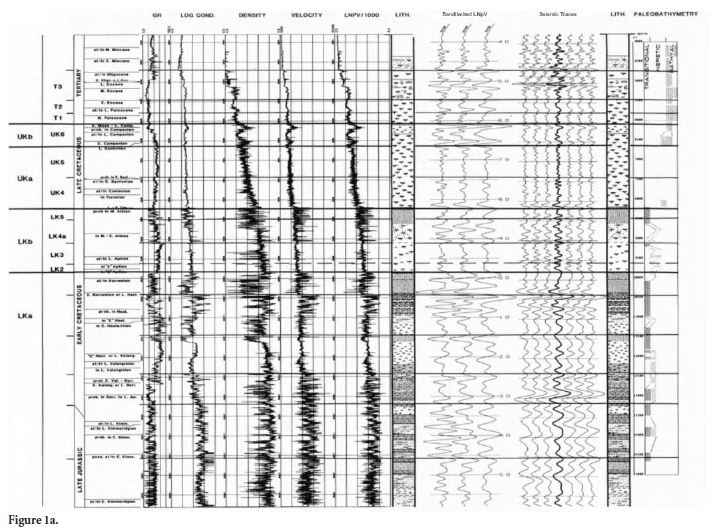

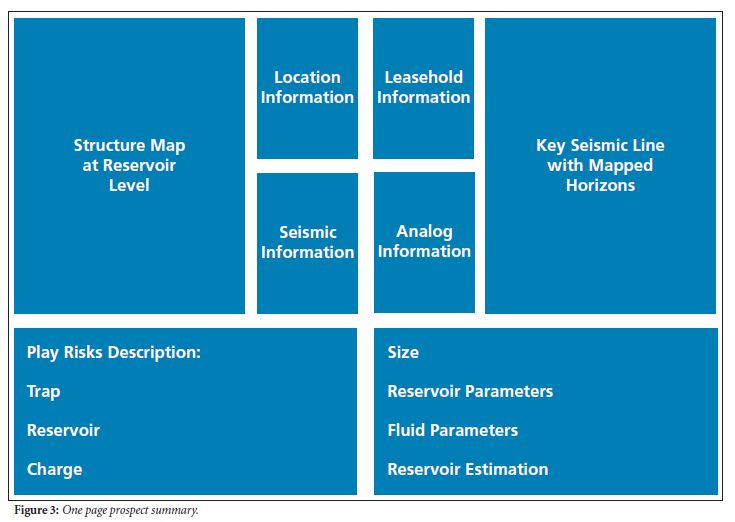

 Too often I observed analyses that skipped key steps or observations that were absolutely necessary to anchor an interpretation. Some groups failed to do the necessary regional and sub-regional work to become familiar with a trend. Some groups did not routinely calibrate well data to seismic at the genetic level to learn where the potential reservoirs “lived” or how they were distributed laterally and/or downdip. Mos t di s turbingly, some groups presumed that almost any amplitude or AVO phenomenon was a direct hydrocarbon indicator. We used to call this “loop-level” seismic stratigraphy. With these lapses, a faniform amplitude became a fan, when it was actually the amplitude supported portion of a regional marl event. In another case a colleague was determined that any high amplitude on an unconformity was indicative of sand. Hmm… A regional marl again with varying porosity was the actual culprit. My work with instantaneous amplitude in the early 80’s and sub-regionally varying trends gave me the tools to avoid many such pitfalls.
 The latter tendency to start an analysis with an amplitude expression became so prevalent that I was moved to display Figure 2 as shown in Figure 3 when I was called forth with two other “contrarians” to speak to Arco Geoscience management in Plano on the integration of geology and geophysics. Perhaps now people would get the point that you cannot ‘base’ your interpretation on the head of a pyramid!

 mitations and interpreted discontinuities on several of the mapped pay horizons, it seemed advisable to see if certain tacit assumptions bore up under scrutiny with an emphasis on better continuity. Little did I know what we would learn!